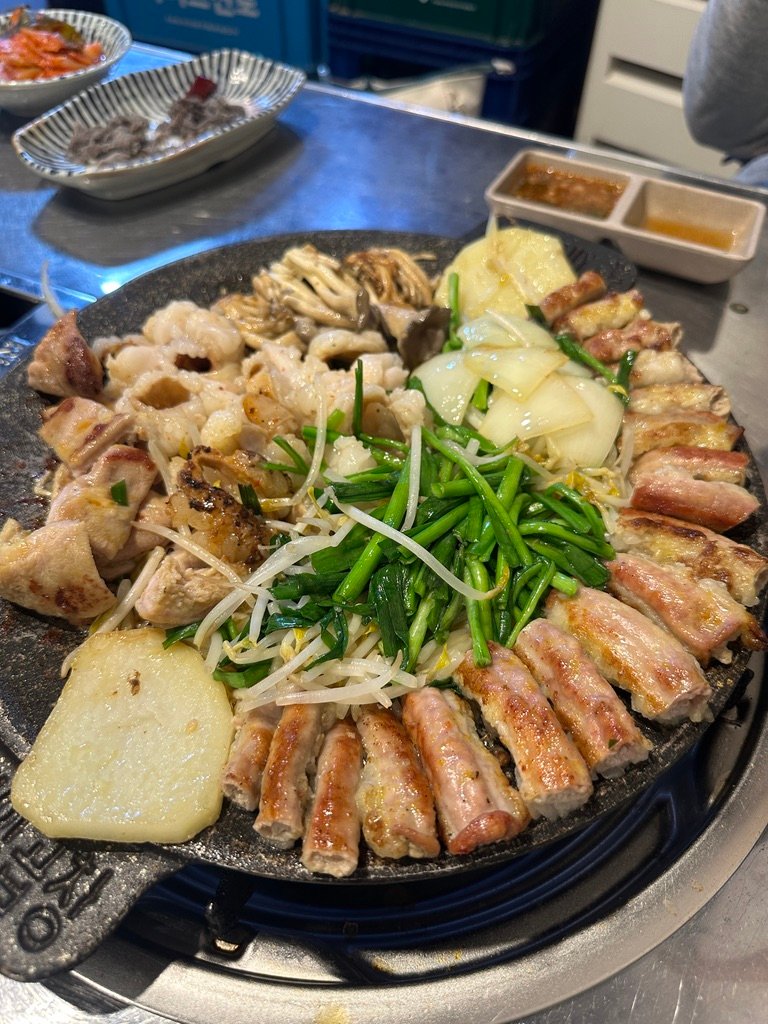
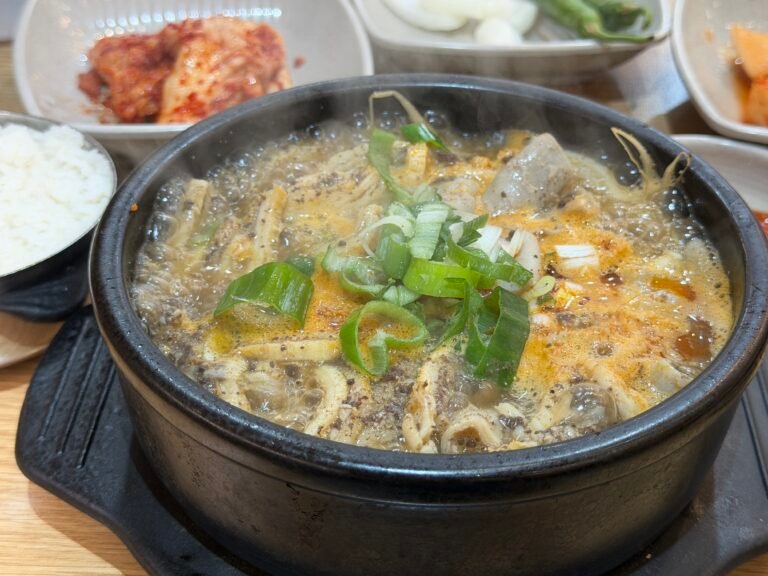
Jeonnong-dong’s Local Favorite: Boklaene Budae-jjigae
Location and How to Get There
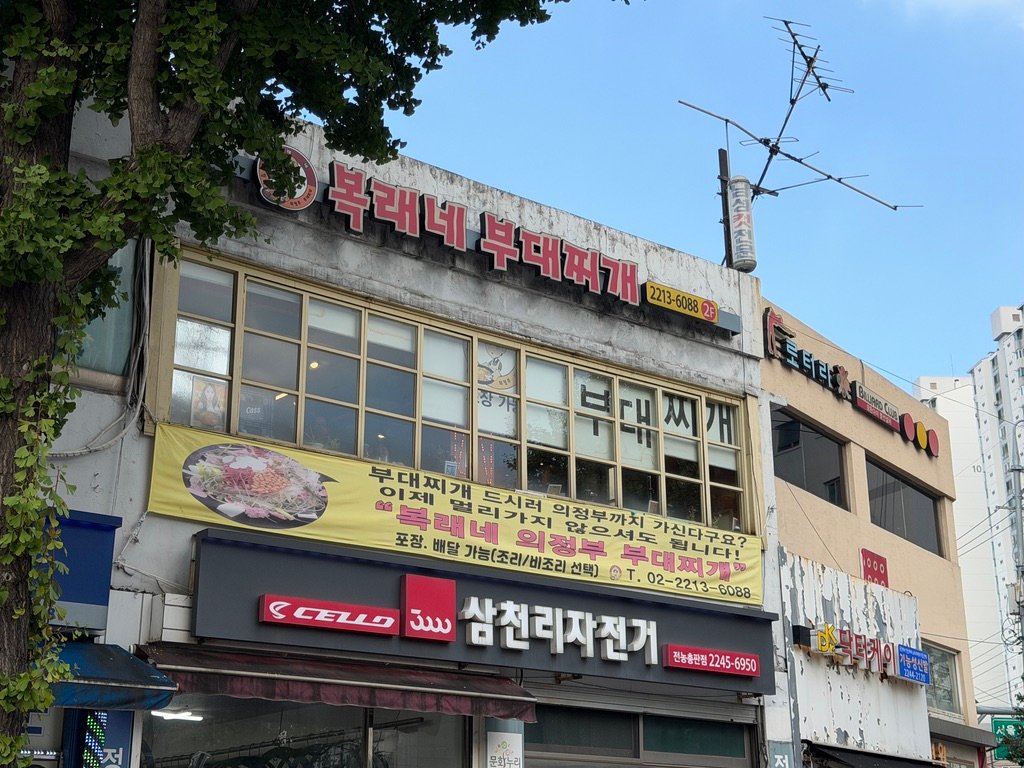
On my way home from work today, I stopped by Boklaene Budae-jjigae (복래네 부대찌개) near Jeonnong intersection in Dongdaemun-gu, Seoul.
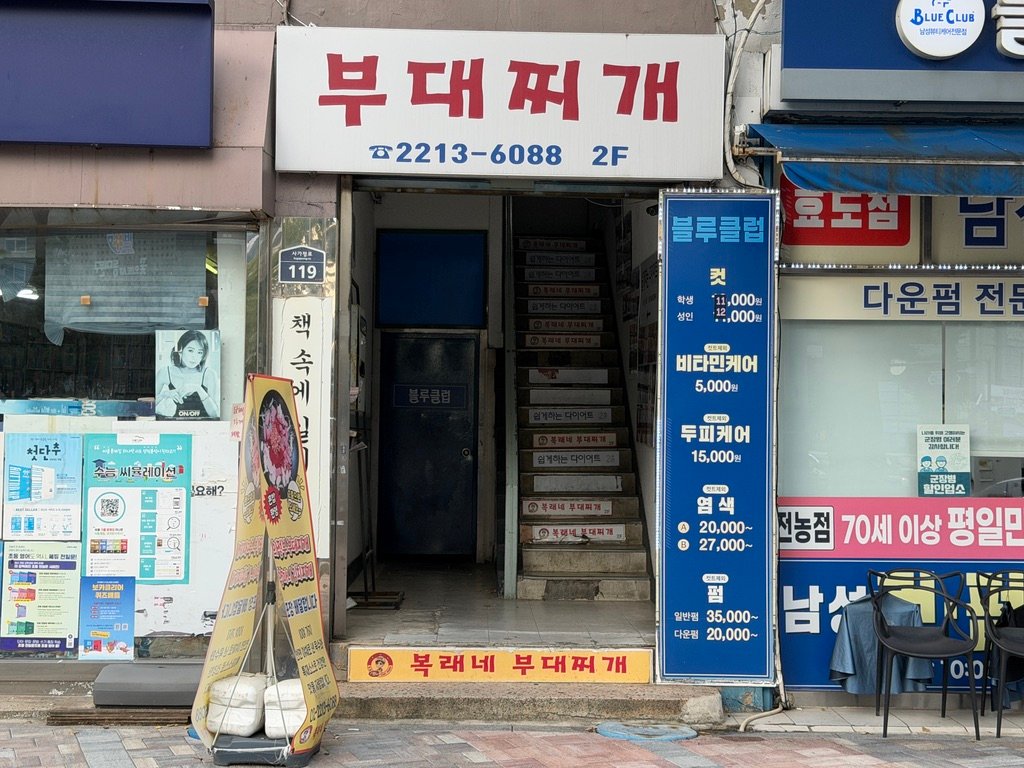
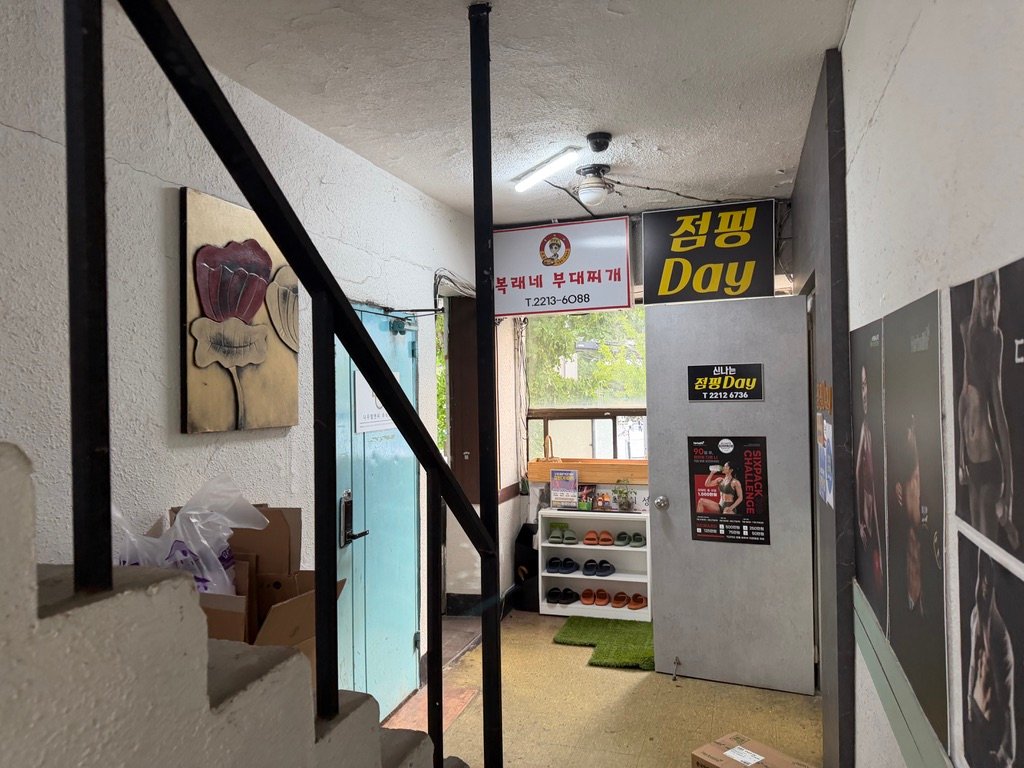
The restaurant sits right by Jeonnong intersection, on the 2nd floor of the building next to McDonald’s. There’s a bookstore on the ground floor, and the restaurant entrance appears right at the top of the stairs beside it, so there’s little risk of getting lost. The area is surrounded by several universities — University of Seoul, Hanyang University, Hankuk University of Foreign Studies, Kyung Hee University — giving it the feel of a spot that’s been a longtime favorite among students and local office workers.
The Atmosphere
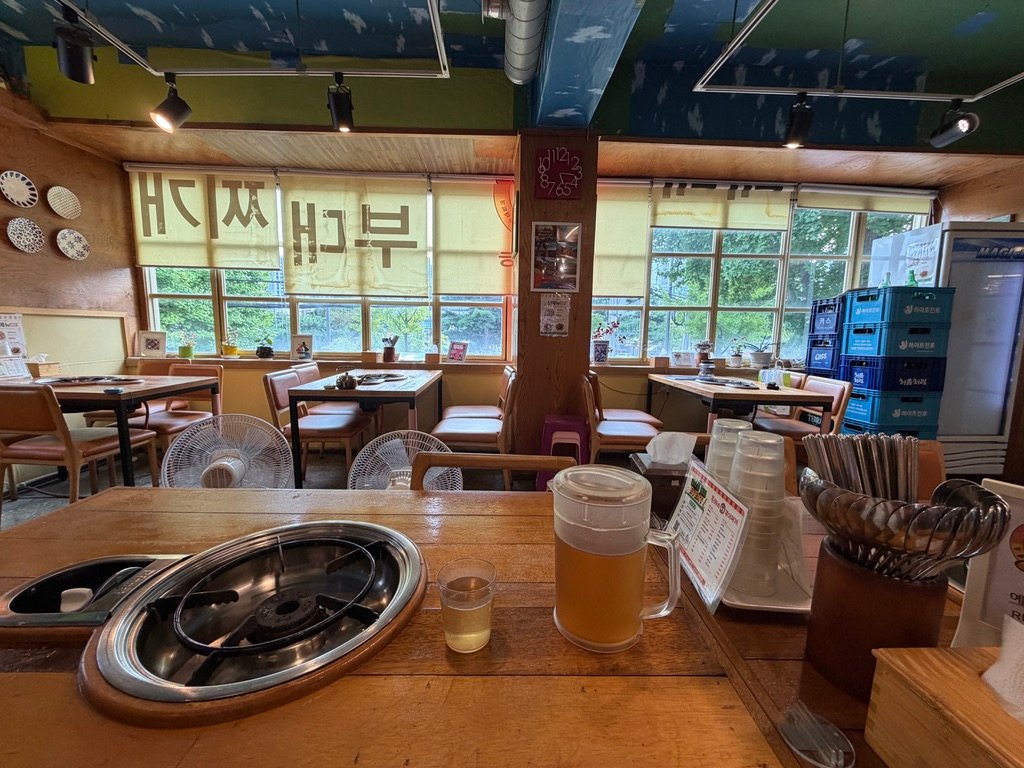
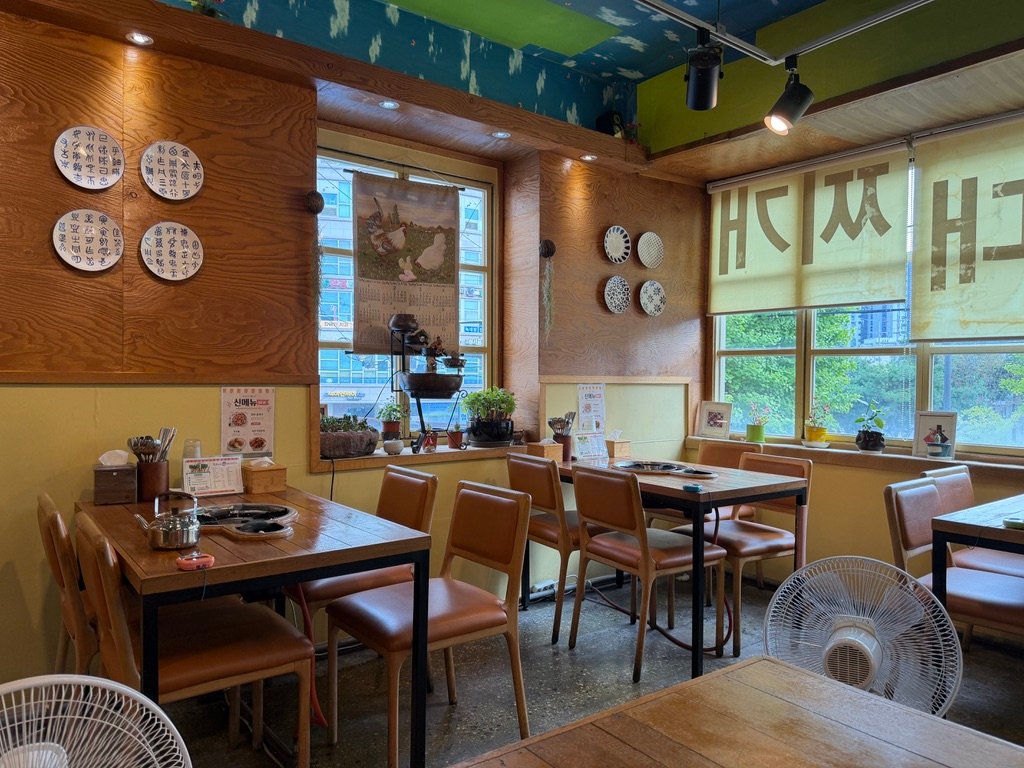
The interior was brighter and tidier than I expected. Wood-toned tables, retro-patterned roller blinds, and Korean-lettering decorative plates on the walls give it a nostalgic, old-school Korean diner feel. Since I visited in summer, each table having its own fan was a nice touch.
The restaurant is run by a husband-and-wife team, and the menu is written entirely in Korean. It might be a little tricky to order for Japanese tourists, but if you can read even a bit of Korean, you’ll be totally fine (I’ve summarized the main menu items below).
What Exactly Is Budae-jjigae?
A quick detour into the history of budae-jjigae.
Budae-jjigae is said to have originated near the U.S. military base (Camp Stanley) in Uijeongbu, just outside Seoul, during the food shortages that followed the Korean War (1950-1953). The story goes that ham, sausage, bacon, and other canned or processed meats that made their way out of the base got simmered together with kimchi and gochujang from Korean households — and that’s how the dish began. The name “budae” itself comes from the Korean word for “military unit.”
In other words, budae-jjigae is a dish born from the resourcefulness of people living through a genuinely hard postwar era — it’s a meal that carries real Korean history in it. Uijeongbu, considered the birthplace of the dish, still has its famous “budae-jjigae street” today, but this Jeonnong-dong spot has its own local fan base, with some even saying it’s better than the originals in Uijeongbu.
Menu and Ordering
One of the best things about this place is that you can order budae-jjigae for a single person. A lot of Korean stew restaurants require a minimum of two servings, so being able to walk in solo — whether you’re traveling alone or just living alone — is a real plus.
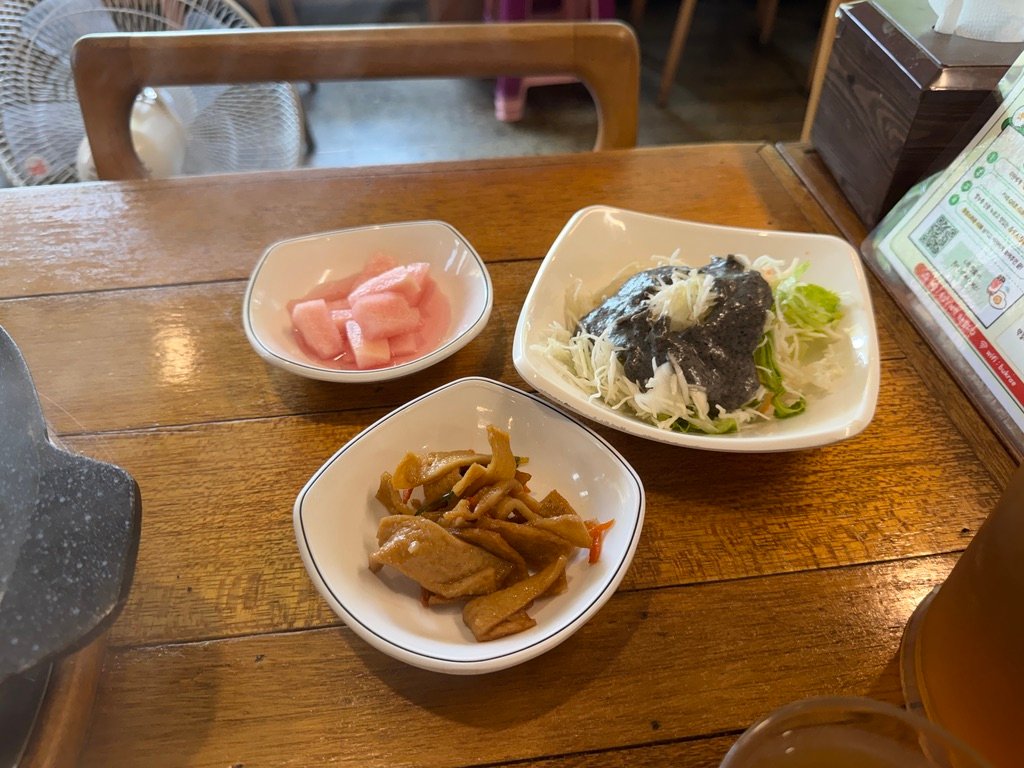
There are three basic banchan: pink pickled radish, cabbage salad, and stir-fried odeng (fish cake). Refills on side dishes are free at most Korean restaurants, so if you run low, don’t hesitate to ask: “반찬 좀 더 주세요” (banchan jom deo juseyo).
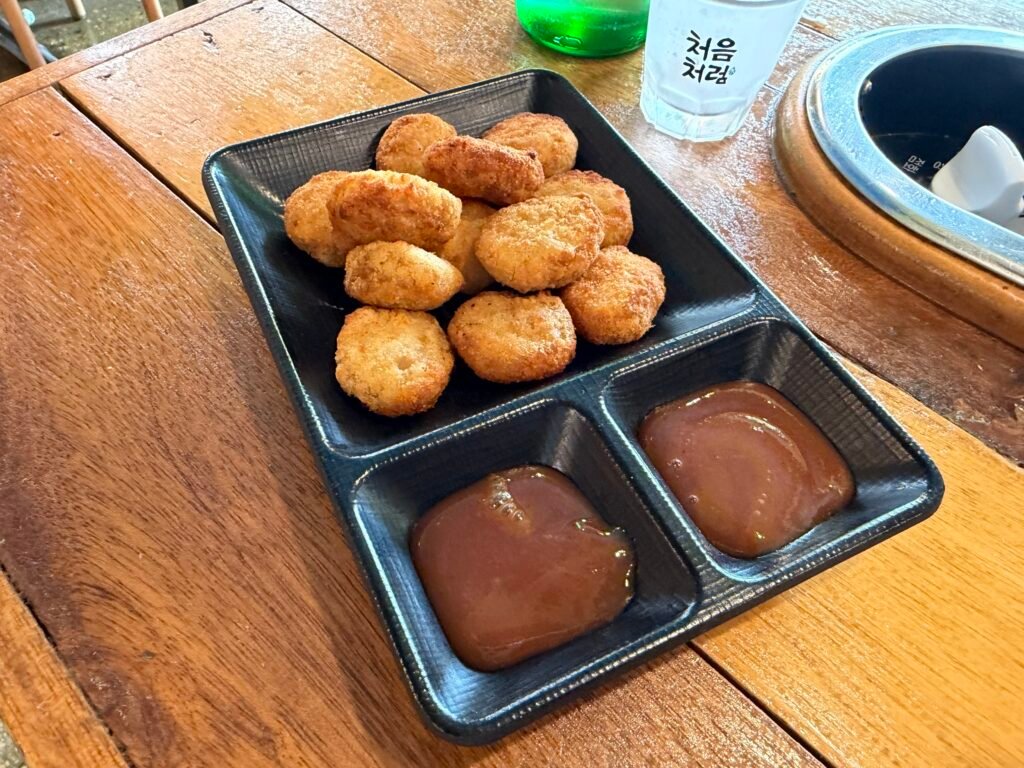
We added mini pork cutlets (kkoma-donkkaseu) as a side — freshly fried and crispy, the kind of thing that would probably be a hit with kids too. To finish, we added ramyeon noodles (sari), which soaked up the broth nicely and kept things interesting till the last bite.
The Timer System — Watching Budae-jjigae Cook
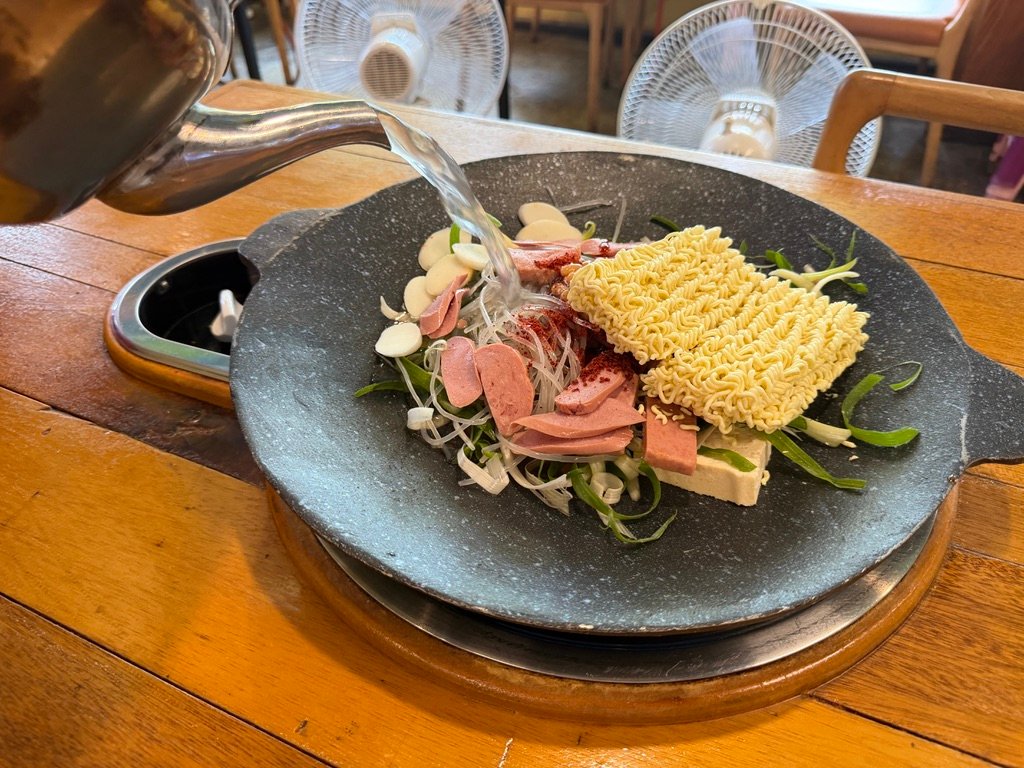
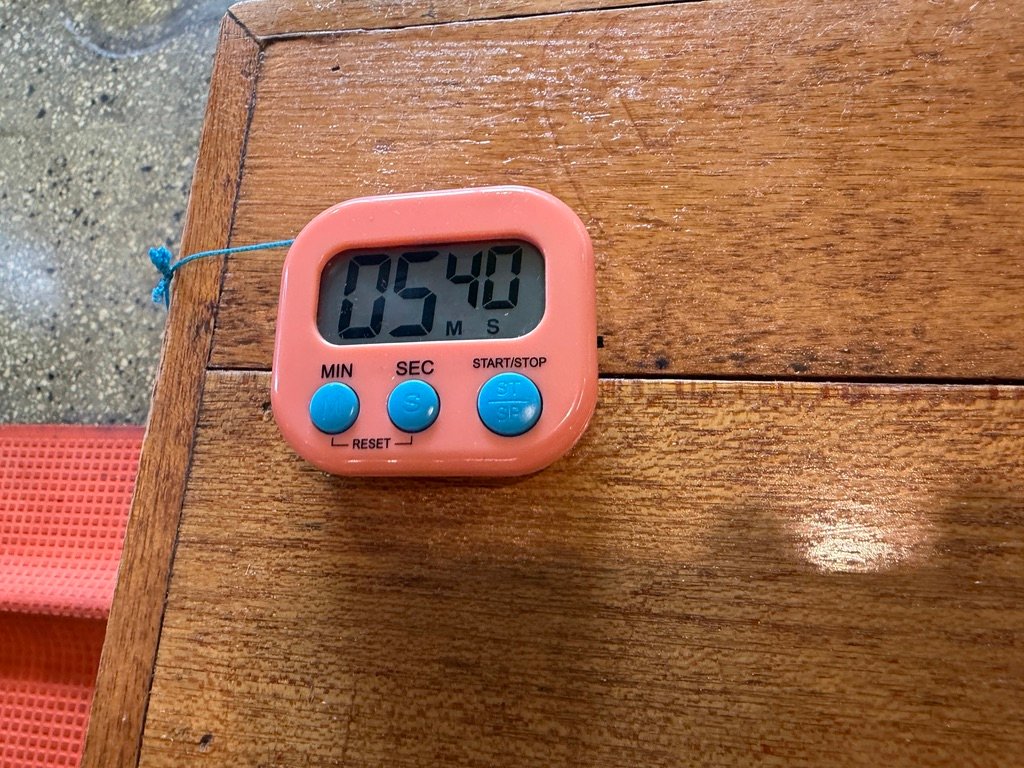
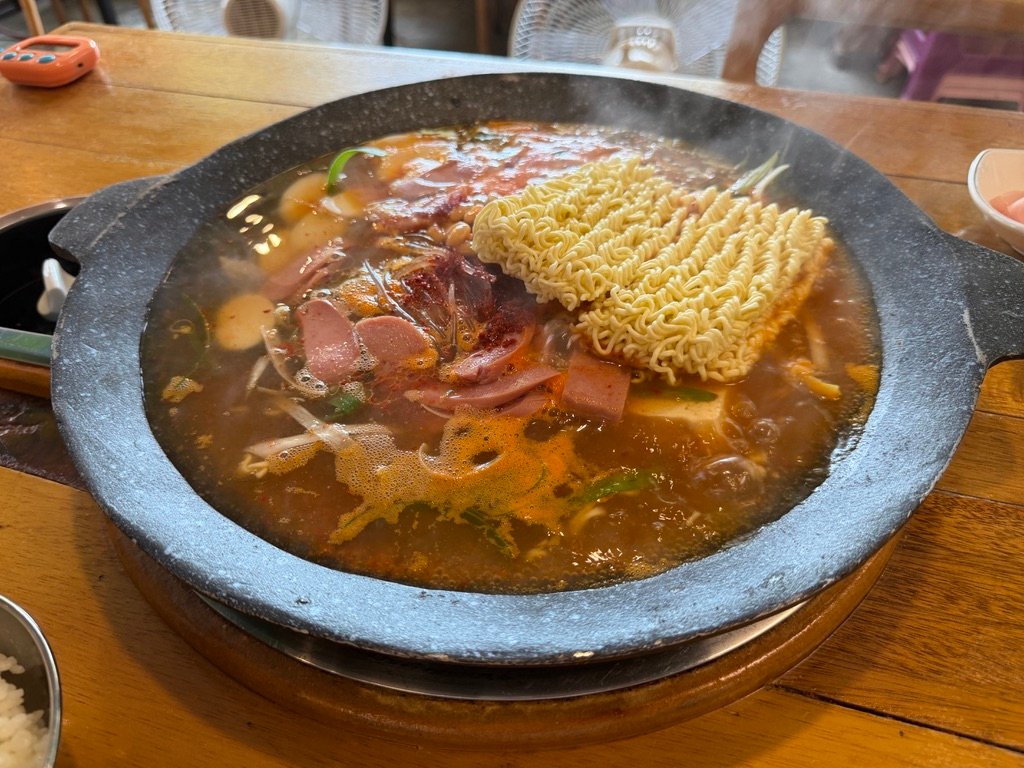
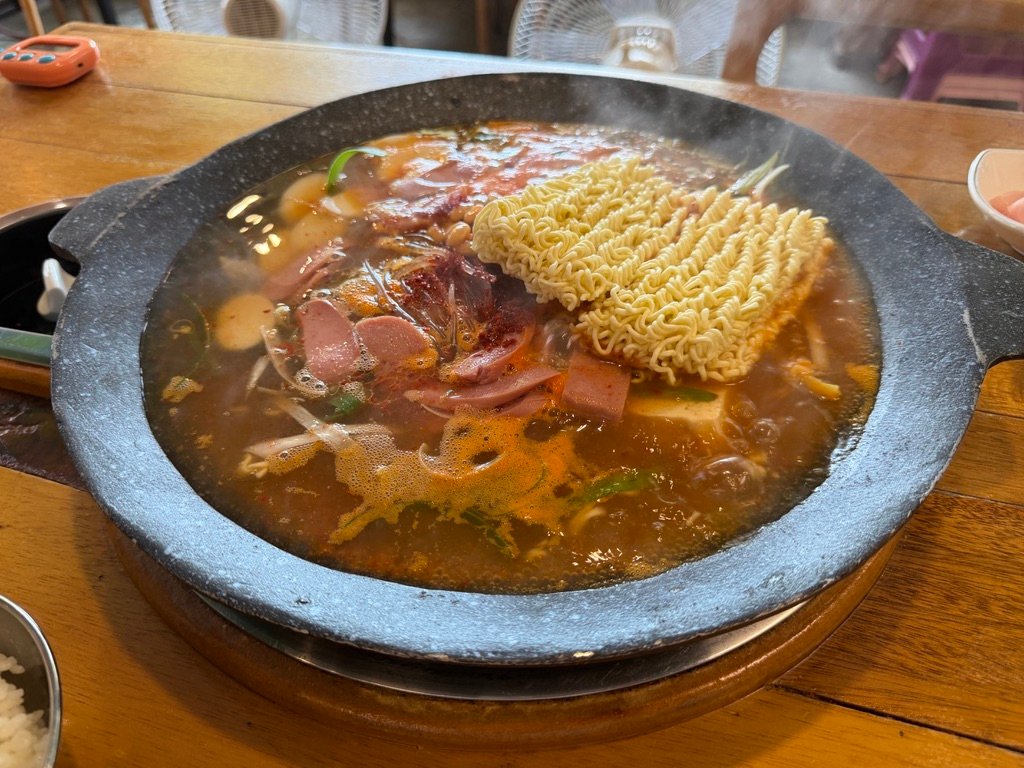
One fun detail unique to this place is the timer-based serving system. A pot with all the ingredients arrives first, and staff pour in the broth right at the table. After that, a pink kitchen timer gets placed on the table and set for a specific time.
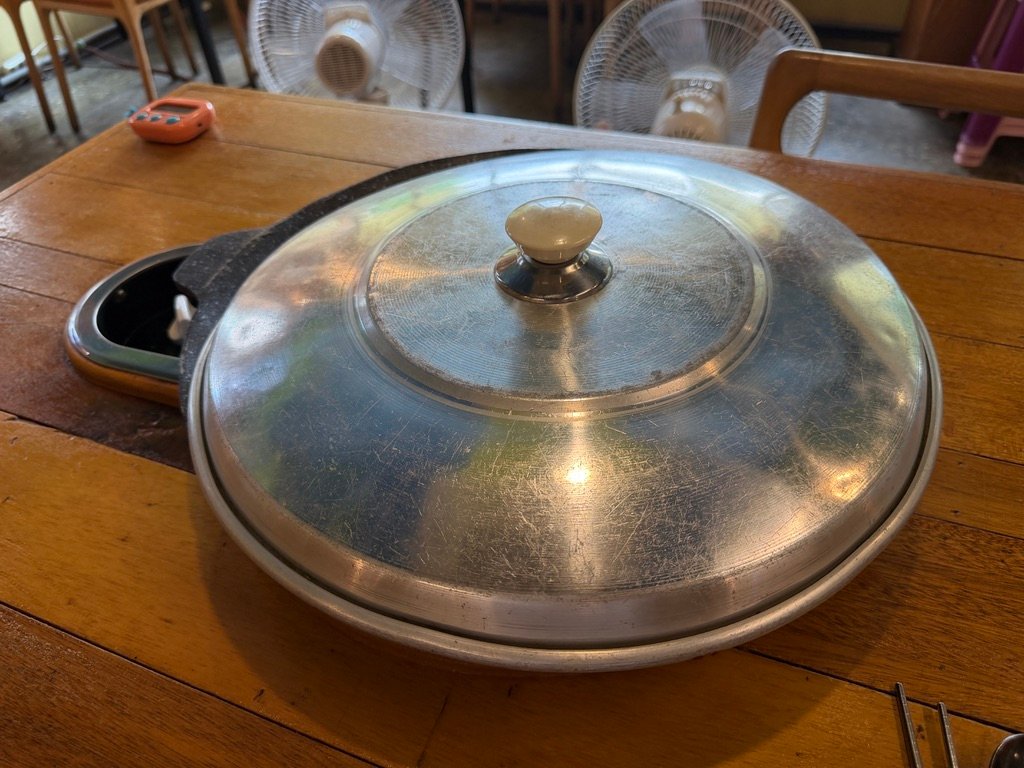
When the timer goes off, staff come back and open the lid for you. Watching the broth bubble away and the steam rise while you wait is honestly part of the fun of eating budae-jjigae here.
Digging In
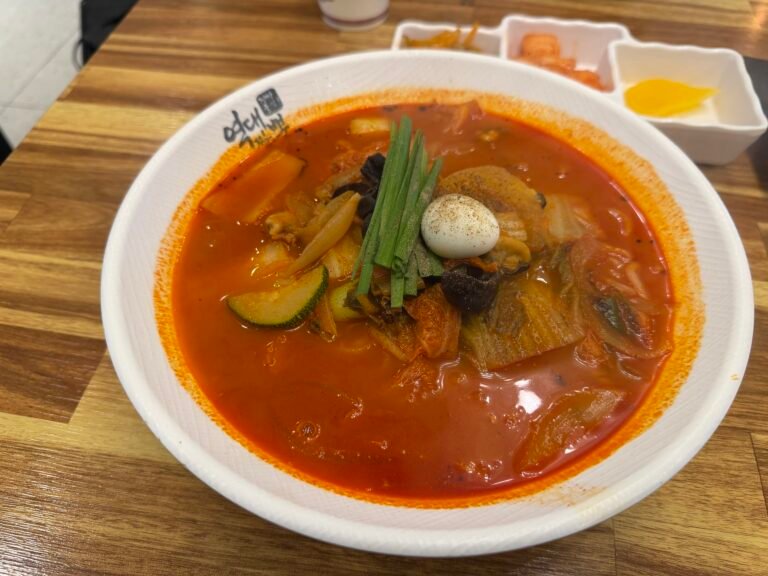
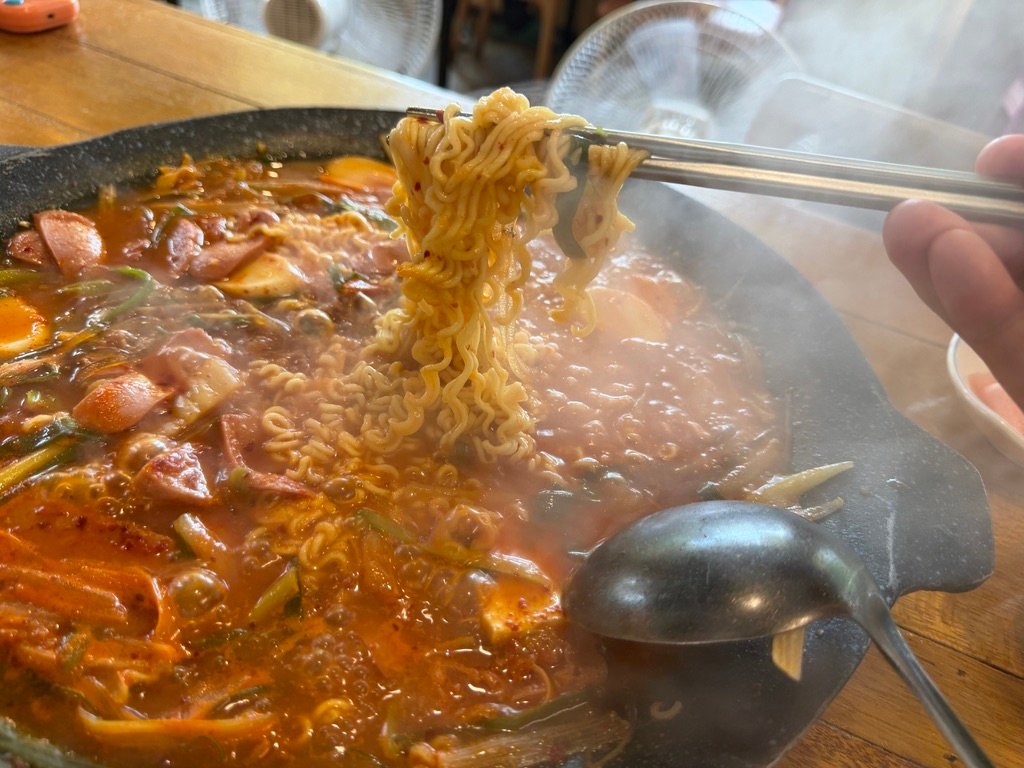
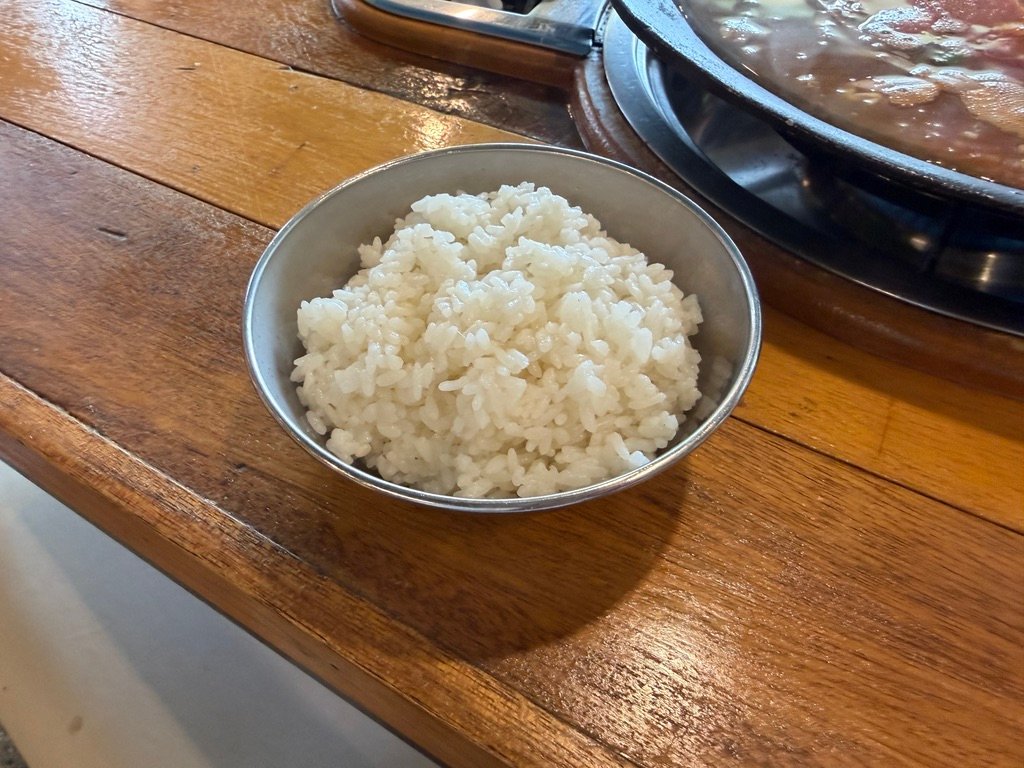
The finished budae-jjigae was loaded with ham, sausage, tofu, scallions, and ramyeon noodles, all bubbling away. The broth has a gochujang base with a spicy kick, but it’s got real depth of flavor too — the kind that makes it hard to stop eating rice alongside it. Lifting the noodles with chopsticks released a burst of steam and an irresistible aroma.
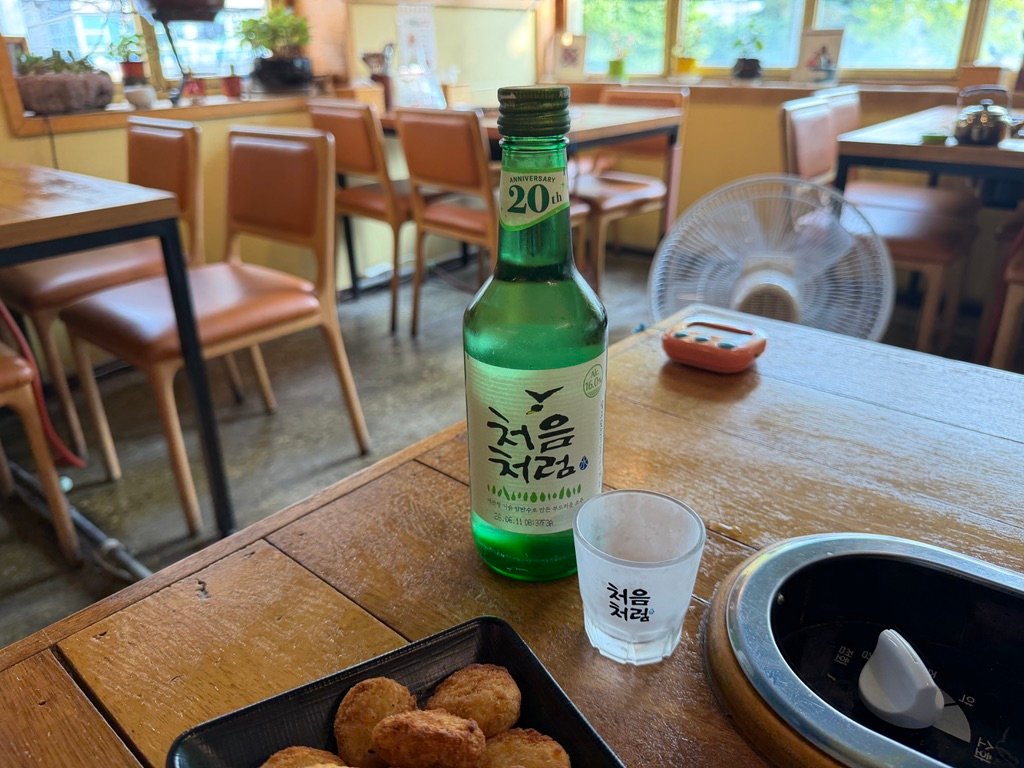
To finish the meal, we had a glass of Chum-Churum, a classic Korean soju. Pairing spicy food with soju is one of those distinctly Korean pleasures.
Pros & Cons
Pros:
- Available for solo diners — no minimum group size required
- Three basic side dishes, with free refills
- Timer-based serving means you never miss the perfect cooking point
- Warm, personal service from the husband-and-wife team gives it a genuine local feel
Cons:
- Menu is Korean-only, which may be a bit of a hurdle if you can’t read Korean
- No parking available, so driving here isn’t very convenient
- A well-known YouTuber (“Rico-chan”) has visited before, but the restaurant still isn’t very well known, and there’s limited information about it in Japanese
Restaurant Info
Name: Boklaene Budae-jjigae (복래네 부대찌개)
Address: 119 Sagajeong-ro, Dongdaemun-gu, Seoul, 2nd floor
Phone: 02-2213-6088
Hours: 10:00 AM–10:00 PM (may vary — calling ahead before visiting is recommended)
Access: 2nd floor of the building next to McDonald’s, by Jeonnong intersection