Daom Yangpyeong Haejangguk: A 24-Hour Hangover Cure in Dapsimni
The Restaurant
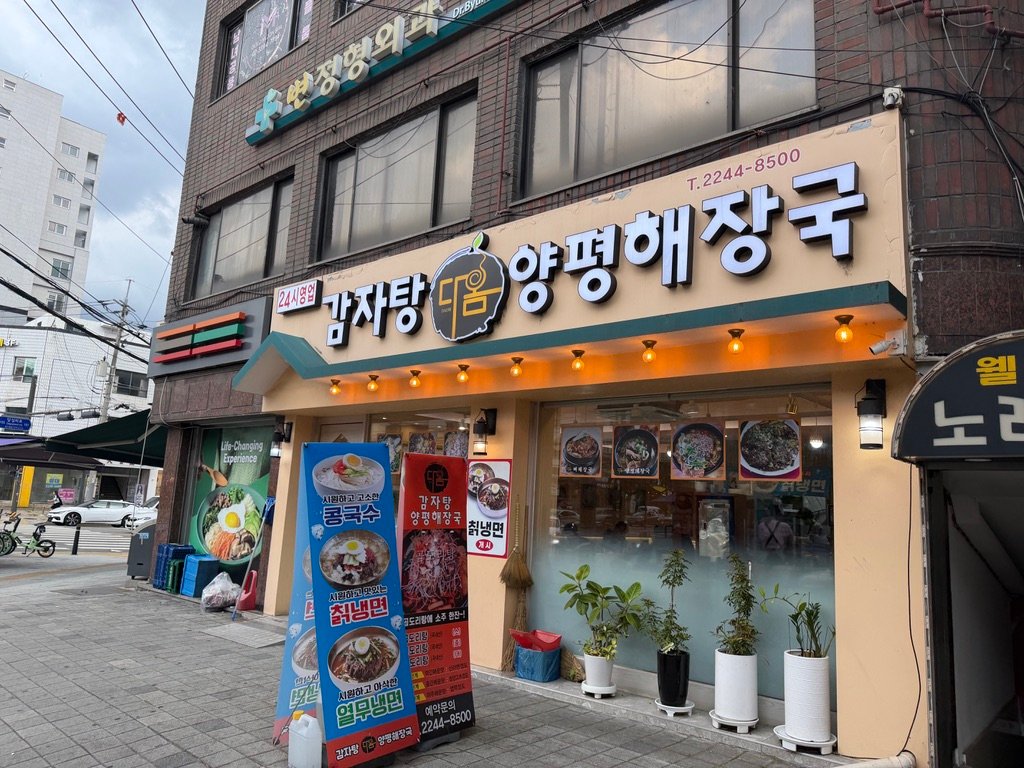
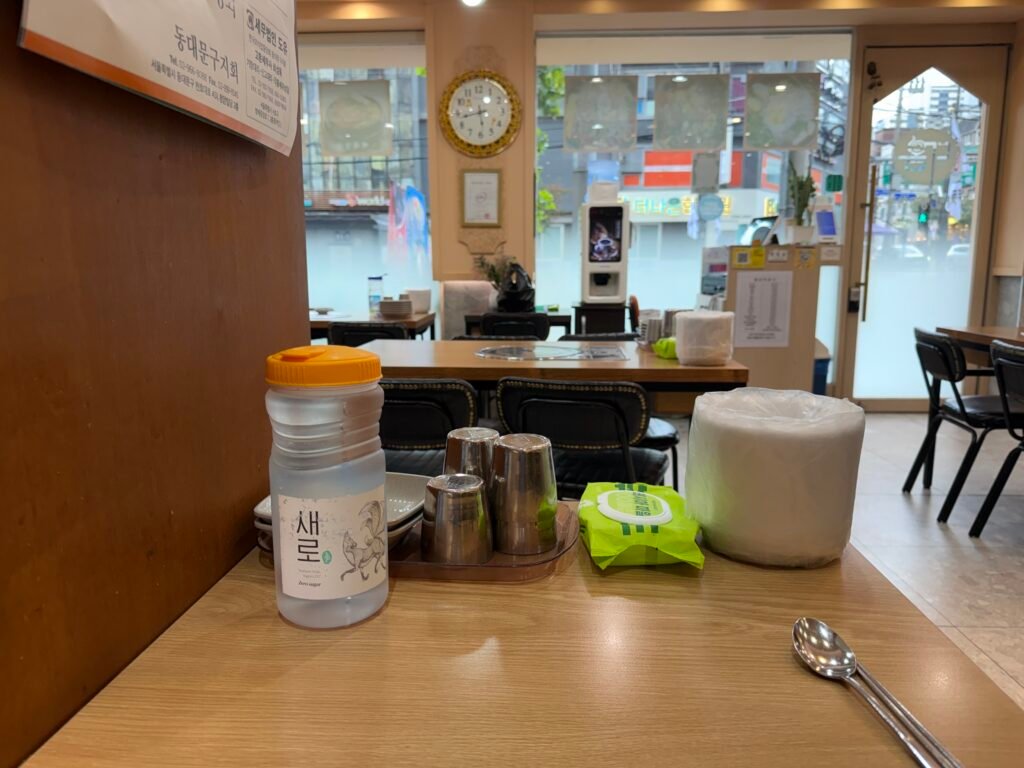
Hello! Today I’m covering Daom Gamjatang Yangpyeong Haejangguk, located at Dapsimni intersection in Dongdaemun-gu, Seoul. Open 24 hours, this haejangguk (hangover soup) specialist has been a longtime favorite among local regulars. The sign includes “gamjatang” too, but what I ordered that day was their signature dish — yang-gopchang haejangguk (beef tripe hangover soup).
Address: 91 Jeonnong-ro, 1st floor, Dongdaemun-gu, Seoul
Phone: 02-2244-8500
Hours: Open 24 hours
What Is Haejangguk, and What Does “Yangpyeong” Mean?
In Korean, “haejang” means to cure a hangover. “Haejangguk” is, quite literally, “hangover-curing soup.” Korea has a long tradition of regional haejangguk varieties — pork-bone based bbyeo-haejangguk, bean-sprout based kongnamul-haejangguk, and seonji-haejangguk made with congealed ox blood, among others.
Among these, yangpyeong-haejangguk is said to have originated in Yangpyeong, a county in Gyeonggi-do just outside Seoul. The story goes that in the late 1960s, an elderly woman selling soup near a bridge construction site along the Yangpyeong riverbank started using beef organs and bones sourced from the local cattle market to feed the laborers working there. Her restaurant became well known, and eventually “Yangpyeong” became synonymous with haejangguk nationwide. That’s why you’ll still spot “양평해장국” signs scattered across Seoul’s downtown and residential neighborhoods today.
In other words, “yangpyeong-haejangguk” is a dish whose name literally comes from a place — a genuine symbol of Korean food culture in a single bowl.
The Meal — Packed to the Brim
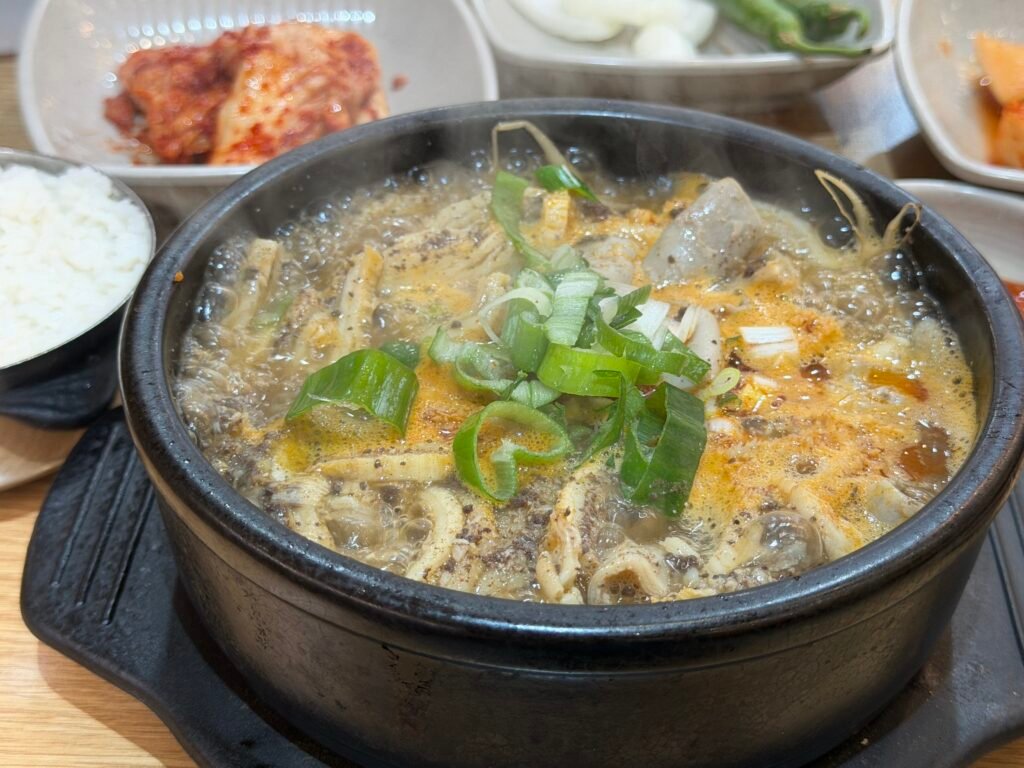
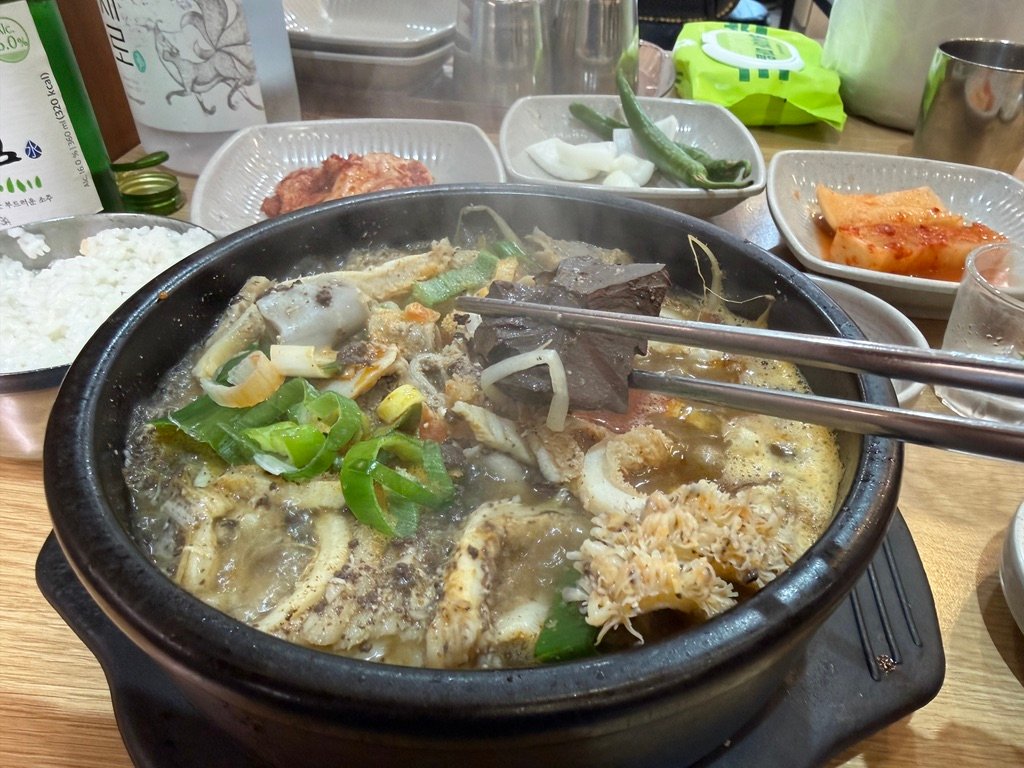
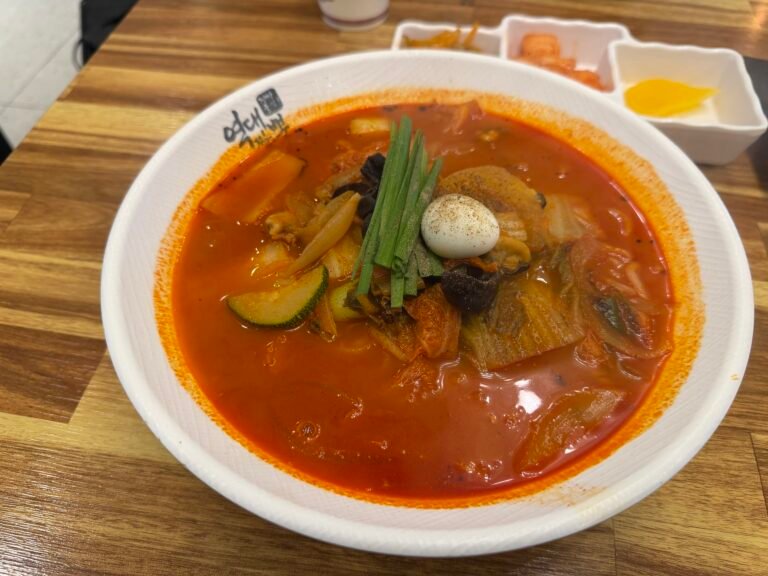
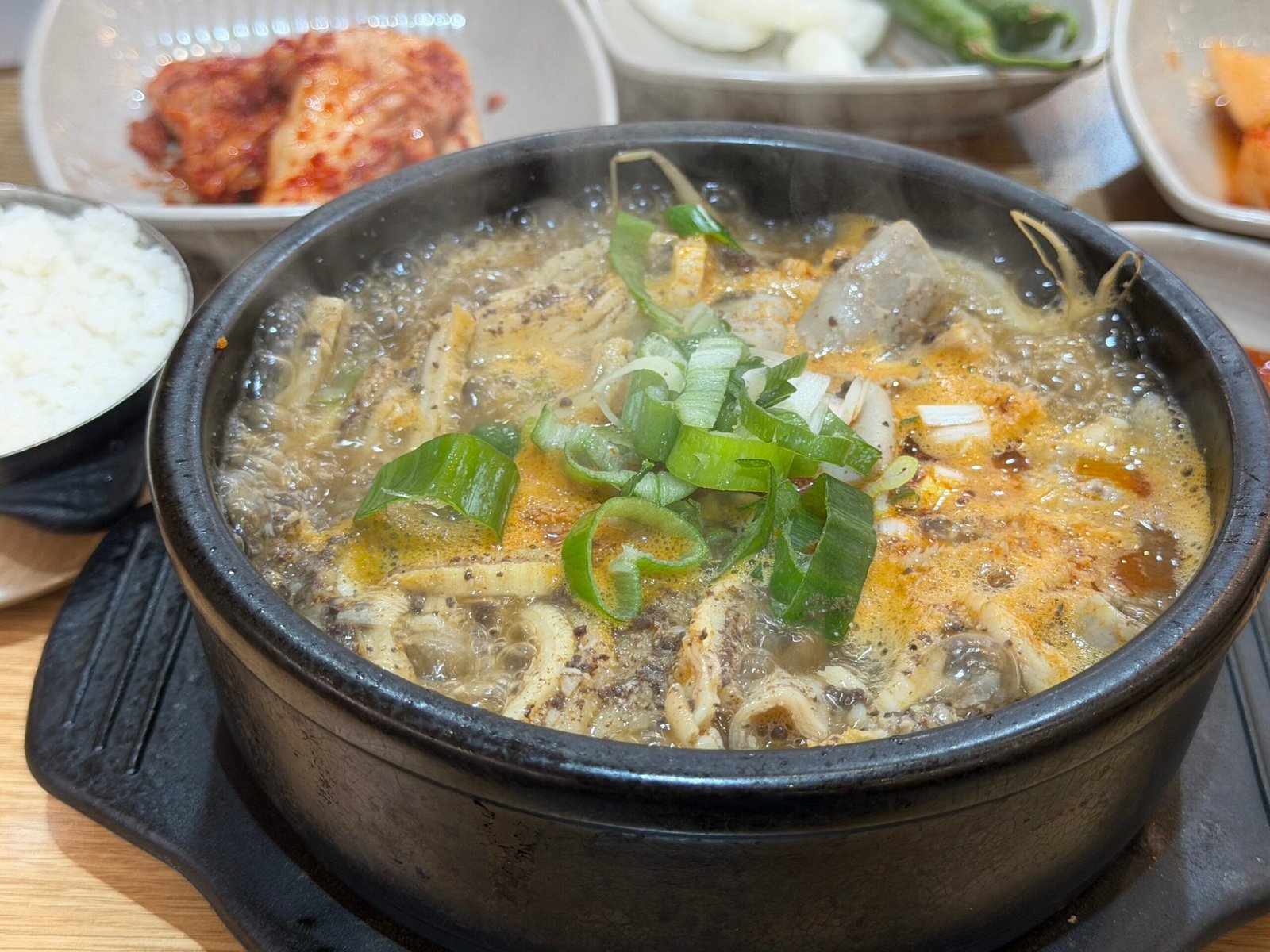
The yang-gopchang haejangguk arrives bubbling in a hot stone bowl (ttukbaegi). Inside, you’ll find beef tripe (gopchang), seonji (congealed ox blood — texturally similar to liver), bean sprouts, and plenty of scallions. The broth combines the savory depth of beef organs with a base of chili powder and fermented paste, giving it more complexity than it might look like at first glance. The spice level is mild-to-medium, so it should work well not just for Koreans but for Japanese visitors who enjoy a bit of heat too.
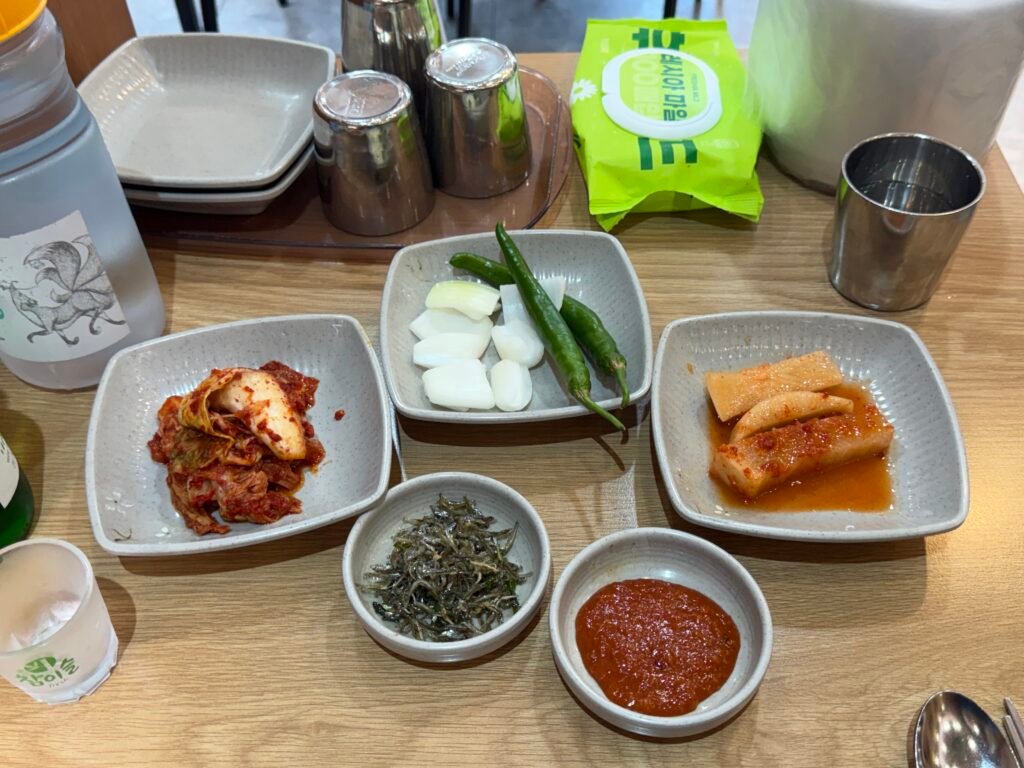
The side dishes (banchan) are generous too — kimchi, pickled radish, raw green chili peppers with garlic, plus soy-based and gochujang-based dipping sauces. Dipping the liver or tripe into the vinegared gochujang sauce (chojang) in particular mellows out any gaminess and makes it even more enjoyable.
My Recommended Order of Eating
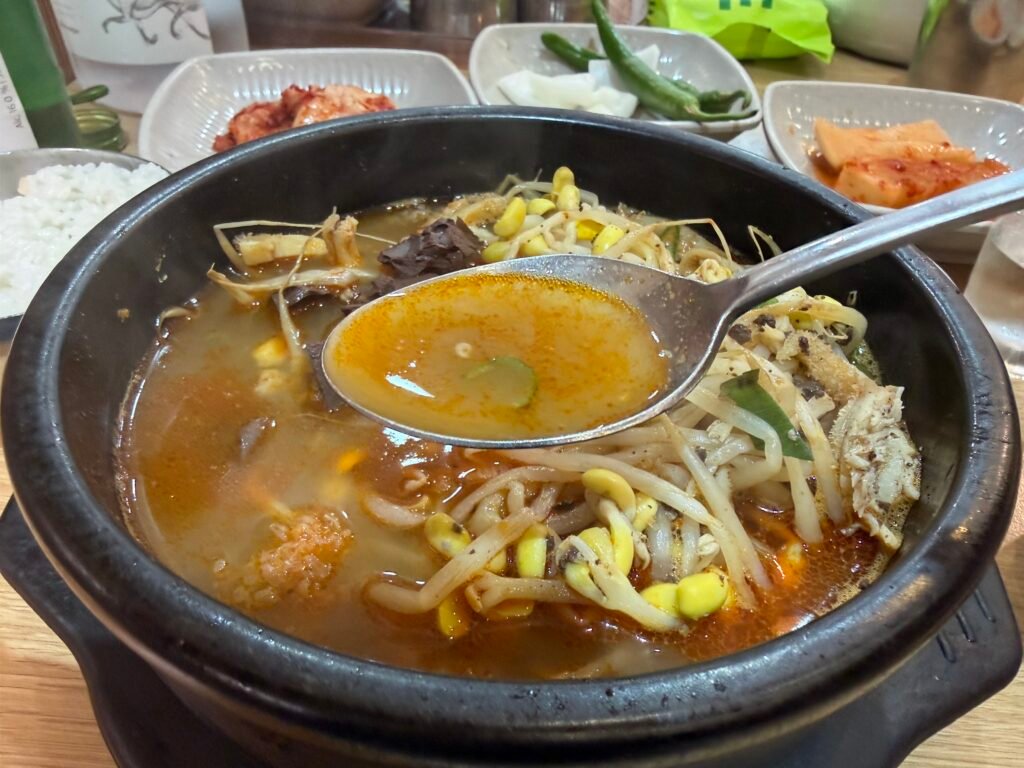
There’s no fixed rule for how to eat haejangguk, but here’s the order I personally recommend:
- First, finish eating the gopchang (beef tripe) and bean sprouts in the bowl
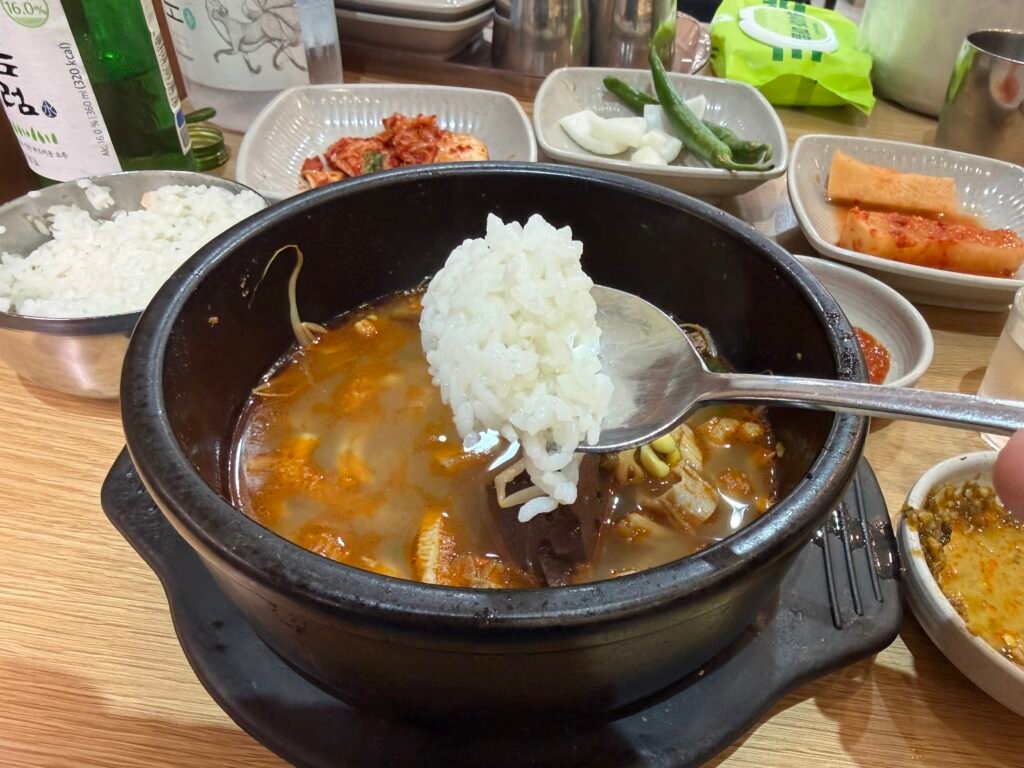
- Then add rice into the remaining broth (mal-aseo) and finish it off while it’s still hot
This way, you get to fully enjoy the texture and flavor of the ingredients themselves first, then finish with rice soaked in all that concentrated flavor from the broth. Of course, you can also just add the rice from the start if you prefer — feel free to find your own way of eating it.
Enjoying It the Korean Way — With Soju
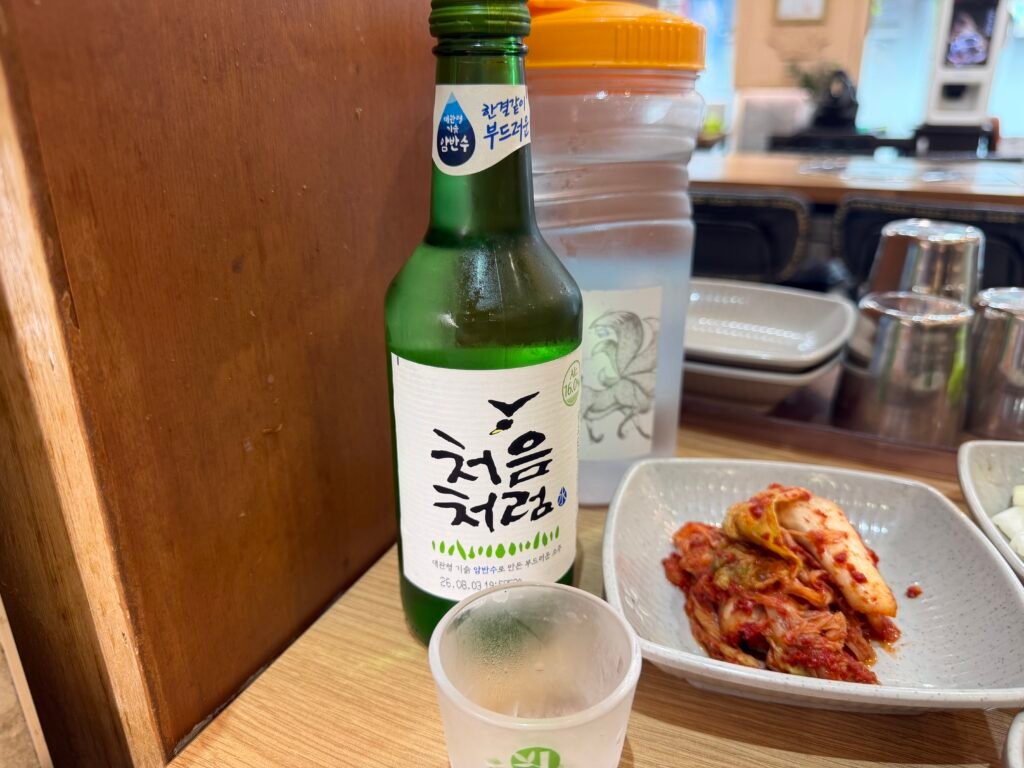
Yangpyeong-haejangguk is known as a hangover cure, but for a lot of Korean men, it’s also a beloved late-night dish to enjoy alongside soju. Along with sundae-guk (pork intestine soup), it’s practically considered a “soul food” for Korean men. Washing down hot soup with a shot of soju is one of those distinctly Korean food pleasures. Of course, if you don’t drink, the rice and soup alone make for a fully satisfying meal.
Pros & Cons
Pros:
- Open 24 hours, so it’s accessible late at night or early morning
- Generous portions of tripe and seonji
- Reasonable pricing
Cons:
- The distinctive gaminess of tripe and seonji might not be for everyone
- Limited seating means you might have to wait during busy times
On the Map