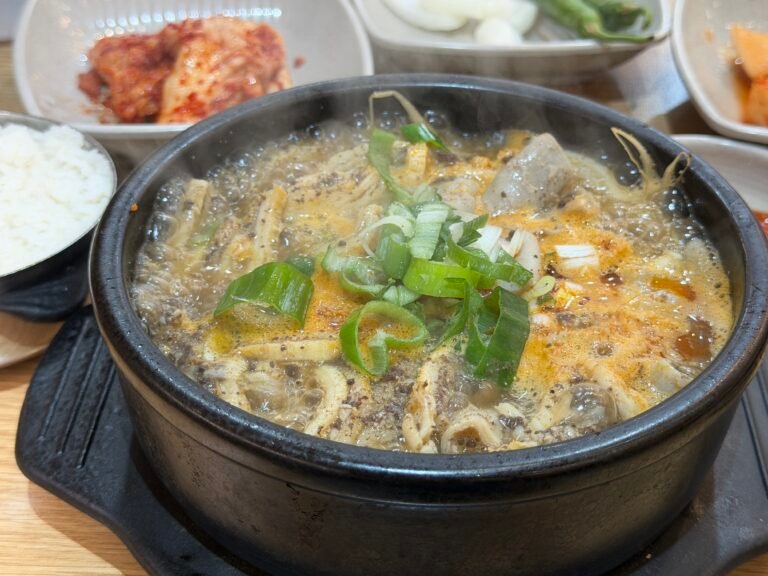
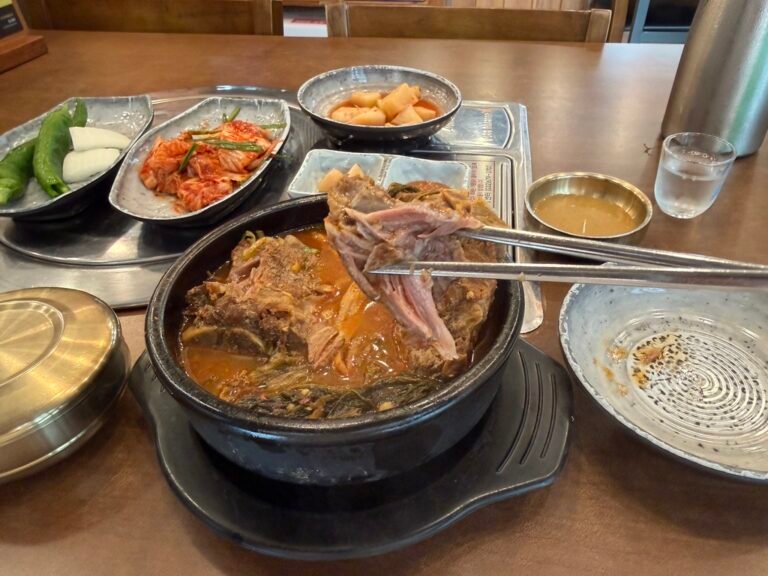
What Is Kongnamul Gukbap? Breakfast at Bonga Jeonjuok in Jangan-dong
A Hearty Start — Seoul’s Classic Breakfast
Good morning! Today I headed to Bonga Jeonjuok, Jangan Branch, in Jangan-dong, Dongdaemun-gu, Seoul, for breakfast.
In Korea, cheyuk-bokkeum (stir-fried pork) and sundae-guk (soup with Korean blood sausage) hold a kind of soul-food status among older men — the “ajeossi” generation. It’s the kind of nostalgic flavor that’s far more popular with middle-aged and older men than with younger people.
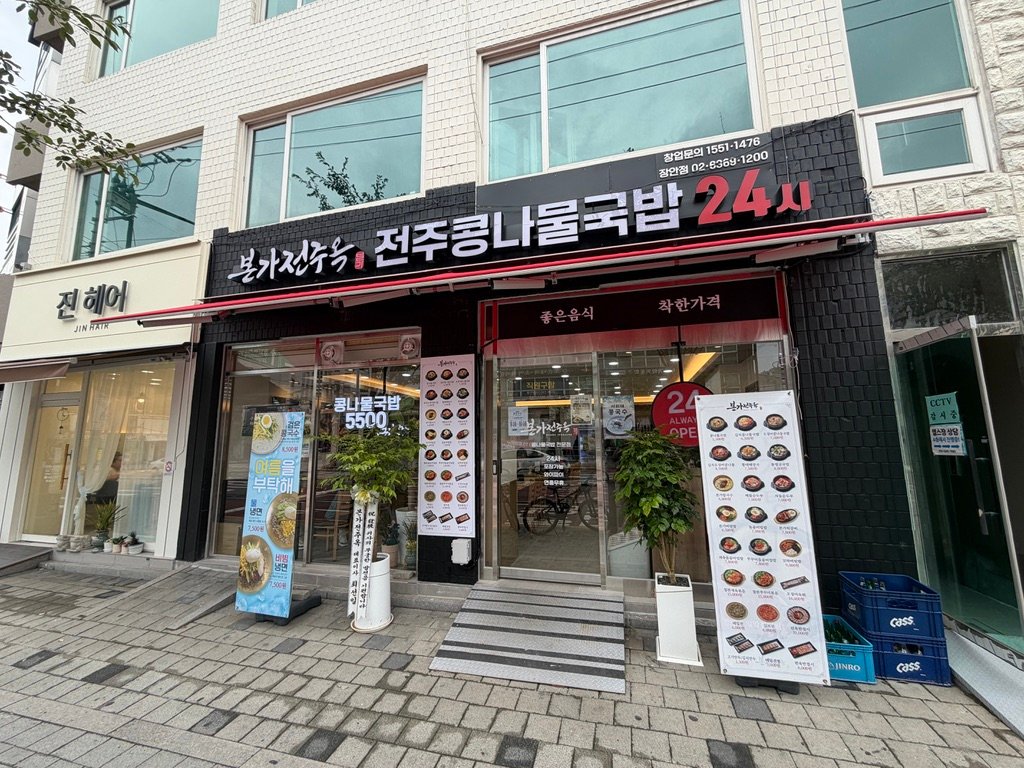
The sign out front proudly displays “kongnamul gukbap — 5,500 won” in big letters, making the value obvious at a glance. Being open 24 hours is another huge plus — easy to visit whether it’s early morning or late at night.
The Menu Is Genuinely Massive
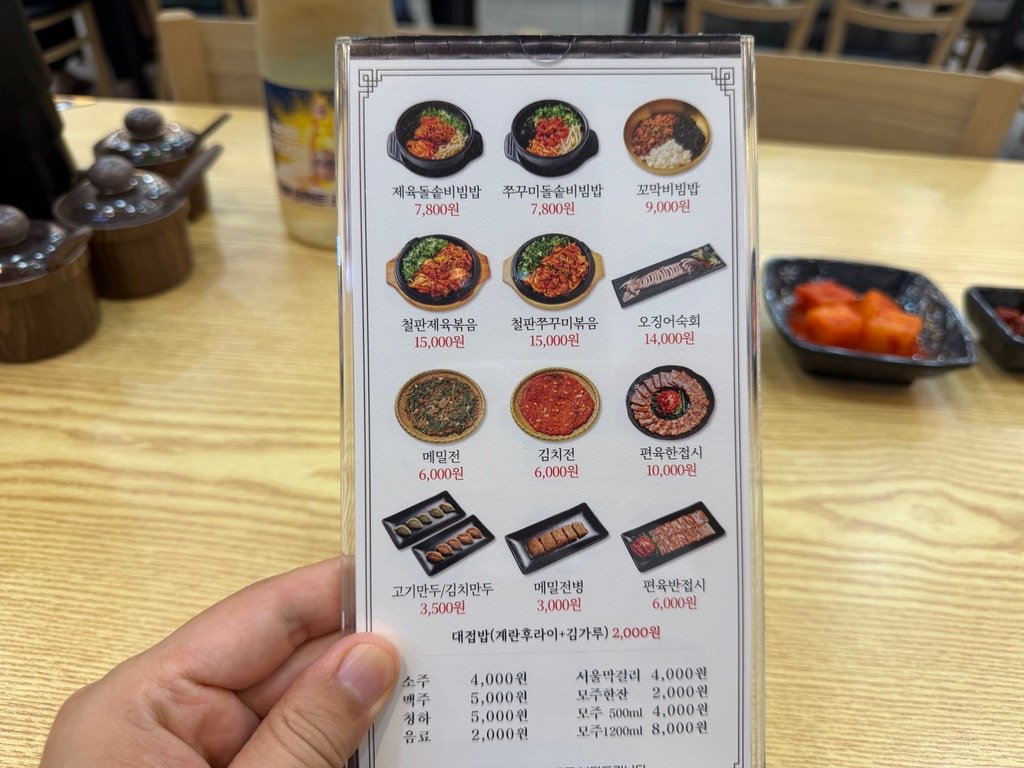
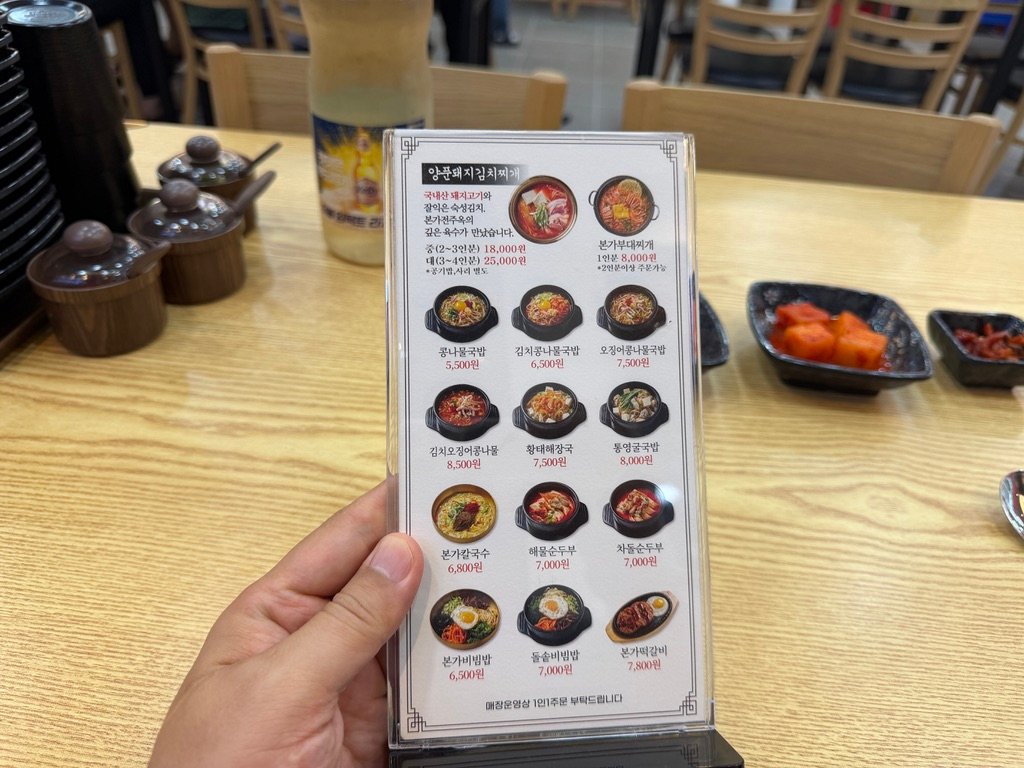
The first thing that surprises you walking in is just how big the menu is. Beyond the kongnamul gukbap lineup, there’s bibimbap, jjigae, griddle dishes, and plenty of drinking snacks too.
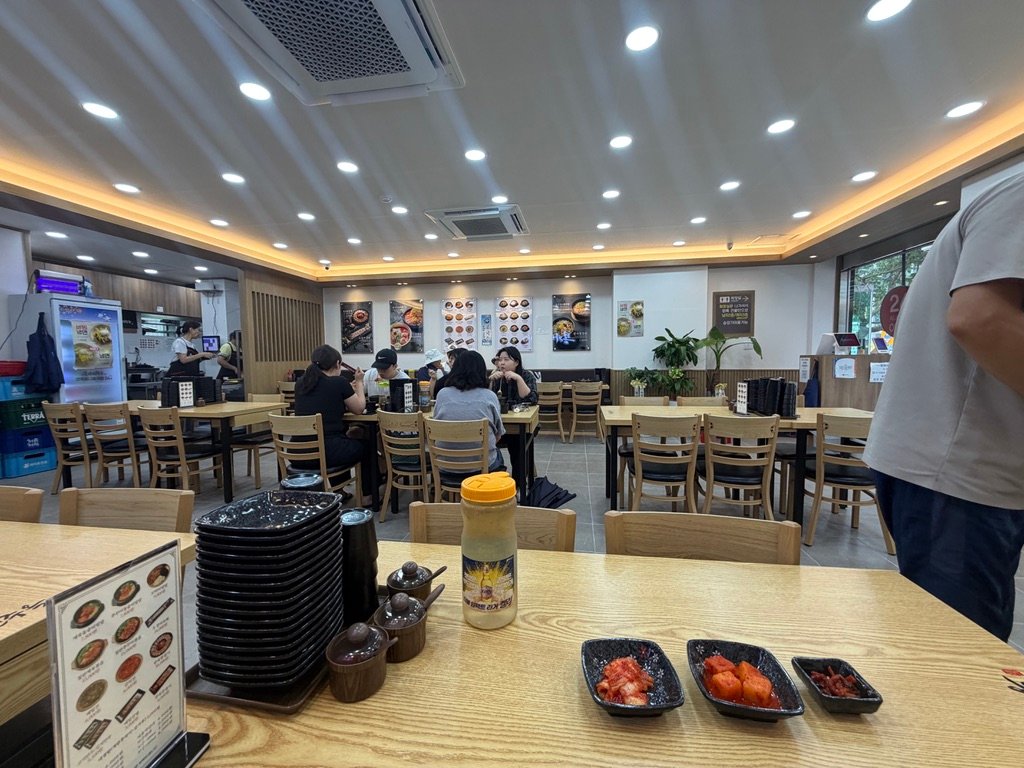
The interior is spacious and clean, with a handful of customers already eating even at this early hour.
What I Ordered — Cheyuk-Ttukbaegi and Kimchi Mandu
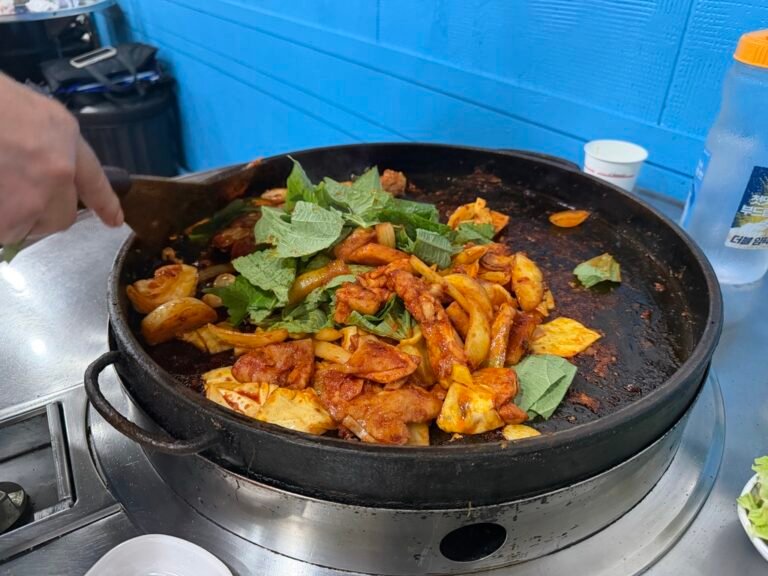
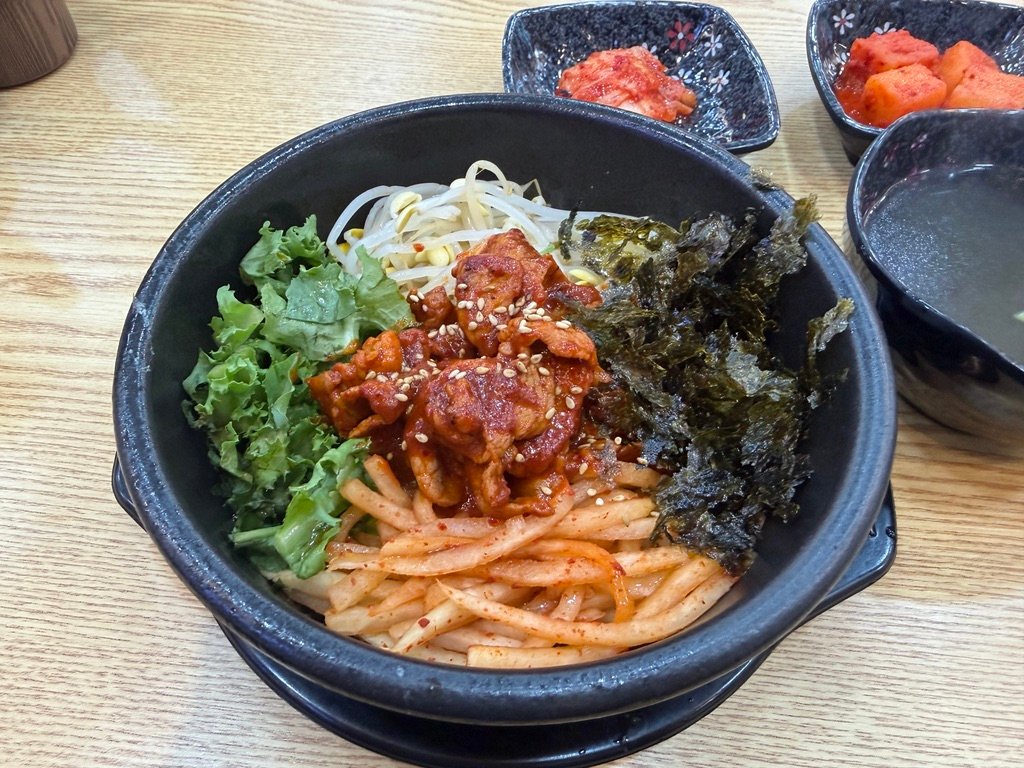
I ordered cheyuk-ttukbaegi (제육뚝배기) and kimchi mandu (김치만두).
Cheyuk-ttukbaegi is a bit different from regular cheyuk-bokkeum. Like a stone-bowl bibimbap, it’s stir-fried pork served piping hot in a bowl, meant to be mixed together with vegetables and rice — basically a Korean-style fusion dish. Rather than thinking of it as just a stir-fry, it’s easier to picture as a cousin of bibimbap.
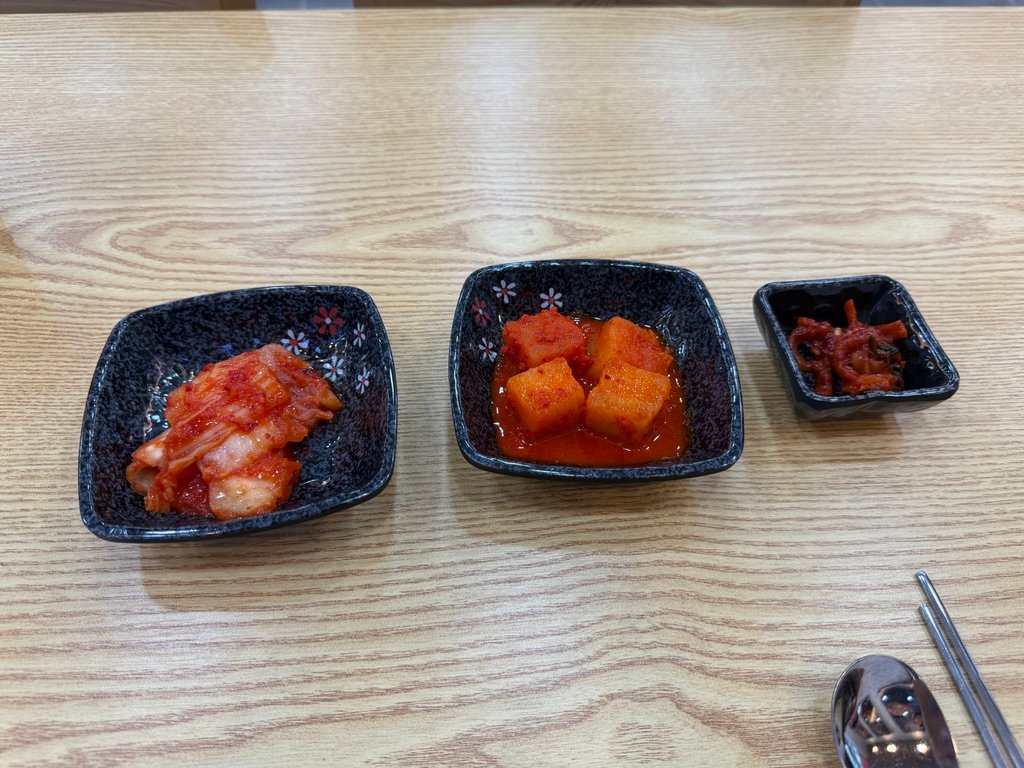
First, the basic side dishes arrive — kimchi, kkakdugi (radish kimchi), and a small bowl of soup.
How Koreans Actually Eat Bibimbap — It Varies More Than You’d Think
Here’s a fun little detail. When Koreans eat bibimbap-style dishes like this, how they actually mix it varies quite a bit from person to person.
Some people pour in about two tablespoons of the accompanying soup to keep the rice from drying out as they mix. Others skip the soup entirely, arguing it dilutes the natural flavor of the ingredients.
Even the mixing tool becomes a matter of preference — some stir vigorously with a spoon, while others gently mix with chopsticks because they don’t want to crush the rice grains. It’s funny how much personality comes through in something as simple as how you eat a bowl of rice.
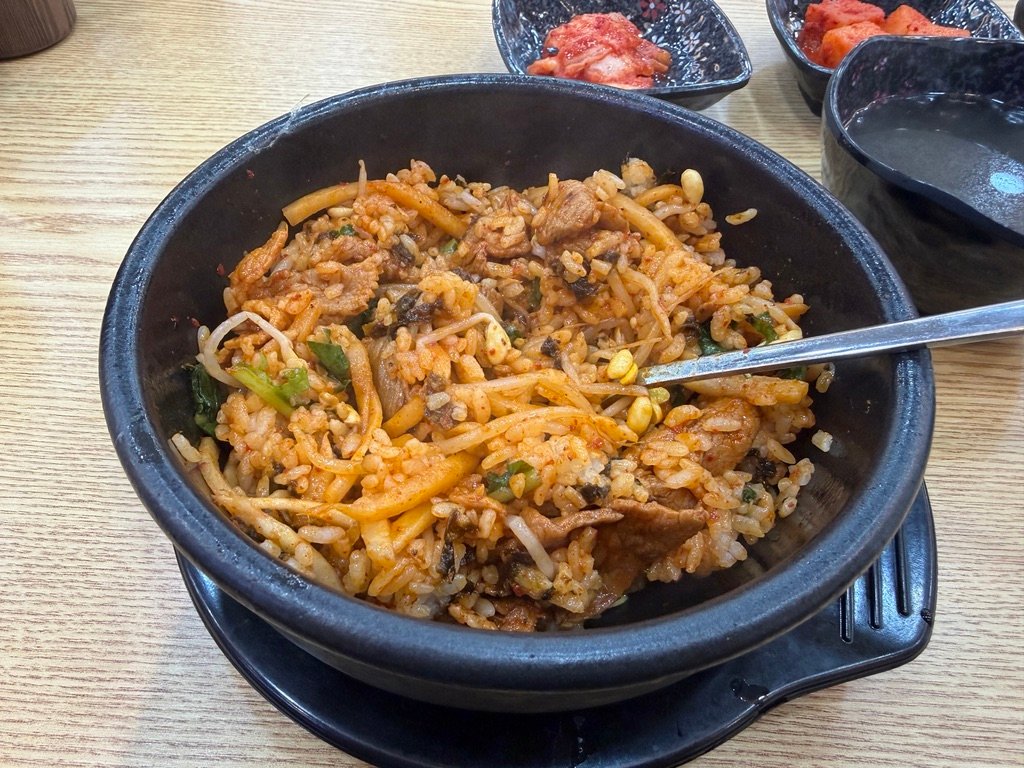
As for the taste — the pork, coated in a sweet-and-spicy gochujang-based sauce, balanced nicely with crispy seaweed and crunchy vegetables. A solid dish to kick off the appetite first thing in the morning.
Kimchi Mandu — “Fine,” But the Thin Skin Was a Nice Touch
The kimchi mandu I ordered alongside it was, honestly, just “fine.” That said, the skin was made noticeably thin, so it didn’t have that heavy, floury taste, and the filling’s flavor came through clearly — a definite plus.
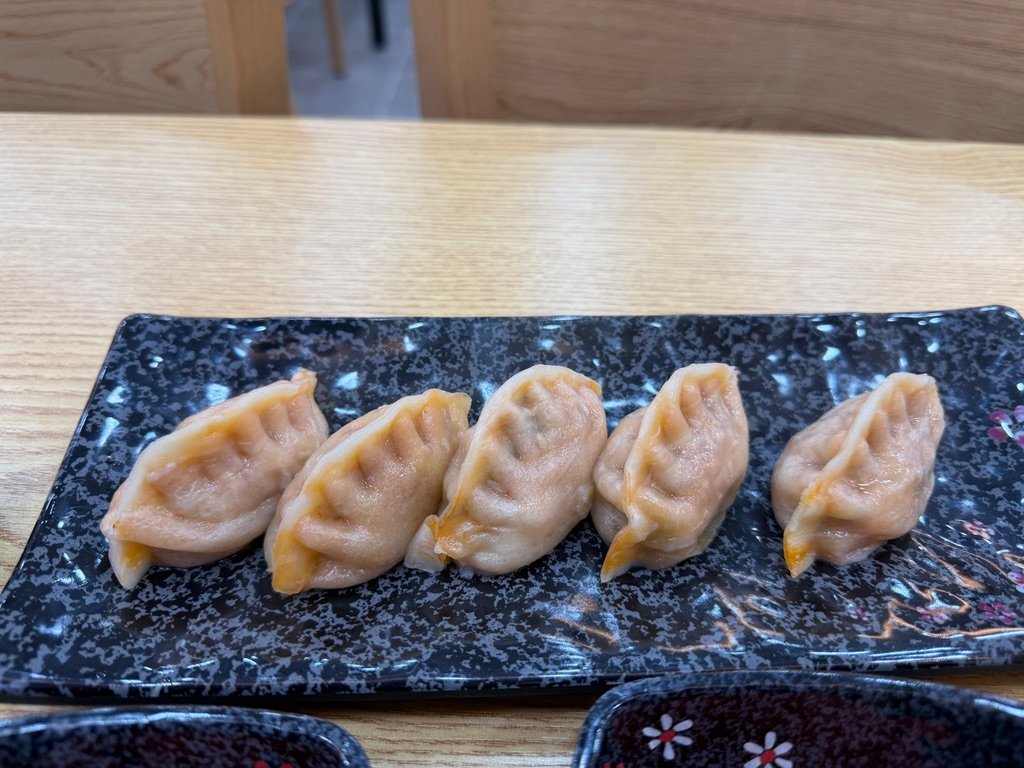
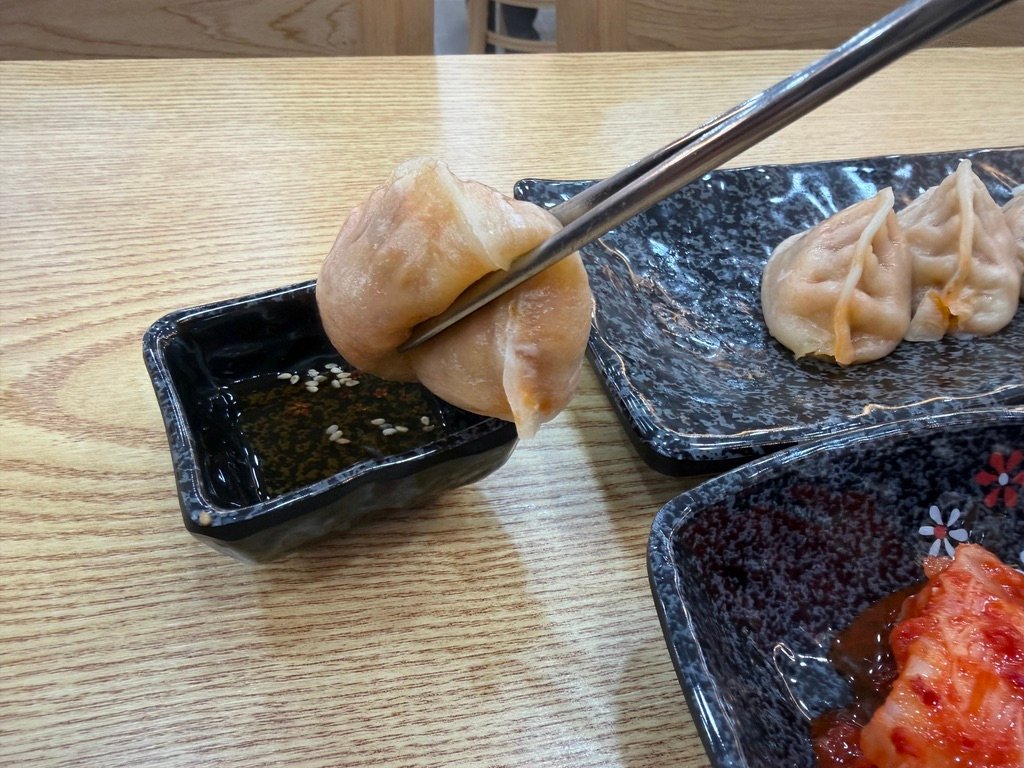
Dipped in the sauce, it had a light, clean aftertaste — a good side dish for breakfast.
Pros & Cons
Pros:
- Great value — a solid, affordable meal even first thing in the morning
- Open 24 hours, easy to visit anytime
- Cheyuk-ttukbaegi has a fun, bibimbap-like fusion quality
- Mandu skin is thin, without a heavy floury taste
Cons:
- The kimchi mandu itself doesn’t have much standout character — just “fine”
- Closed on Mondays, so it’s worth checking before you go
Note: as of now, this restaurant is closed every Monday. Worth double-checking before your visit.
Right across the street, diagonally, you’ll also find Wangko Deungalbi (왕코등갈비), another spot covered on this blog — worth checking out together if you’re exploring the area.
If you want to learn more about the origins of kongnamul gukbap, check out the official Seoul Tourism Organization website as well.