Jeontong Chuncheon Dakgalbi in Dapsimni: Summer Stamina, Seoul Style
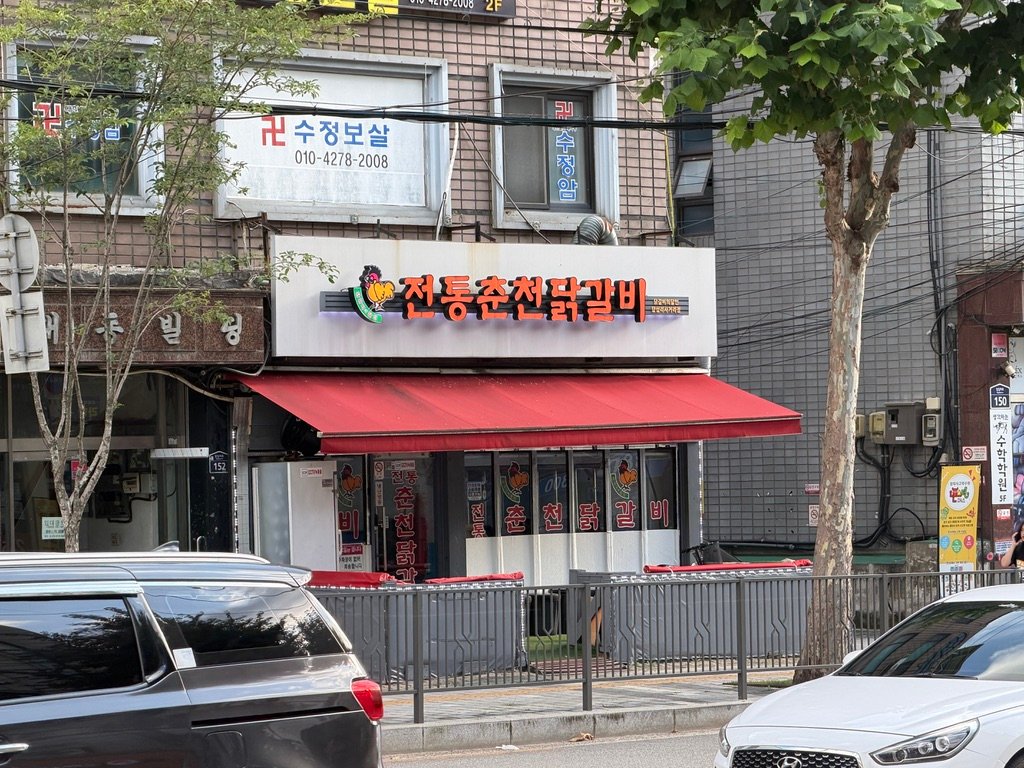
Hey everyone! Last night’s dinner was dakgalbi at a place called Jeontong Chuncheon Dakgalbi, near the Dapsimni intersection. Today I want to introduce this spot, and also talk a bit about a Korean summer tradition.
What Is “Sambok”? Korea’s Hottest Days of Summer
Korea has three specific days — chobok, jungbok, and malbok — that mark the hottest stretch of the year. Together, they’re called “sambok.” These dates are set by the lunar calendar, so they shift slightly each year.
Traditionally, Koreans believed stamina dropped noticeably during this period, so there’s a long-standing custom of eating hot, nutrient-rich food to stay energized. Samgyetang (ginseng chicken soup) is the most famous example, but chicken dishes in general tend to get a lot of love during this stretch. Dakgalbi fits right into that tradition — it’s the kind of dish meant to fuel you up and help you push through the heat.
Why Chuncheon-Style Dakgalbi Is So Famous
Dakgalbi originally comes from Chuncheon, in Gangwon-do. Back in the 1960s, people started substituting cheap chicken for pork, marinating it in a sweet-and-spicy gochujang sauce, and grilling it on an iron griddle — that’s where the dish began. Over time, it evolved into the style we know today, stir-fried together with cabbage and onions. It became especially popular with students and soldiers thanks to its filling portions at an affordable price, and eventually spread across the country as Chuncheon’s signature dish.
About the Restaurant
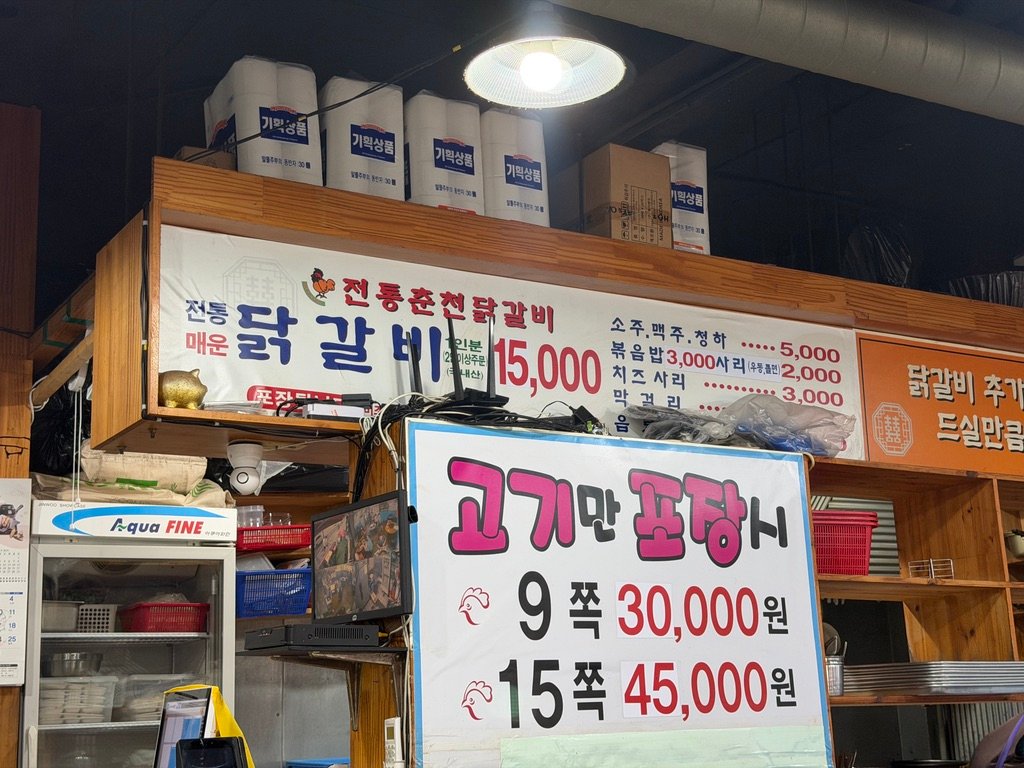
This place sits near the Dapsimni intersection, and the interior isn’t especially large. It can feel a little loud and lively, but that’s honestly part of the charm. The tables have a distinctive cylindrical iron griddle built in, which is part of the fun of visiting.。
The menu is refreshingly simple:
- Dakgalbi (mild or spicy — only two options)
- Add-on noodles (sari): udon-style noodles, or jeolmyeon (a chewy, cold-noodle-style option)
- Fried rice
- Makguksu (buckwheat cold noodles)
Since there’s really only one core dish, it’s unclear whether staff speak Japanese, but ordering itself is extremely simple.

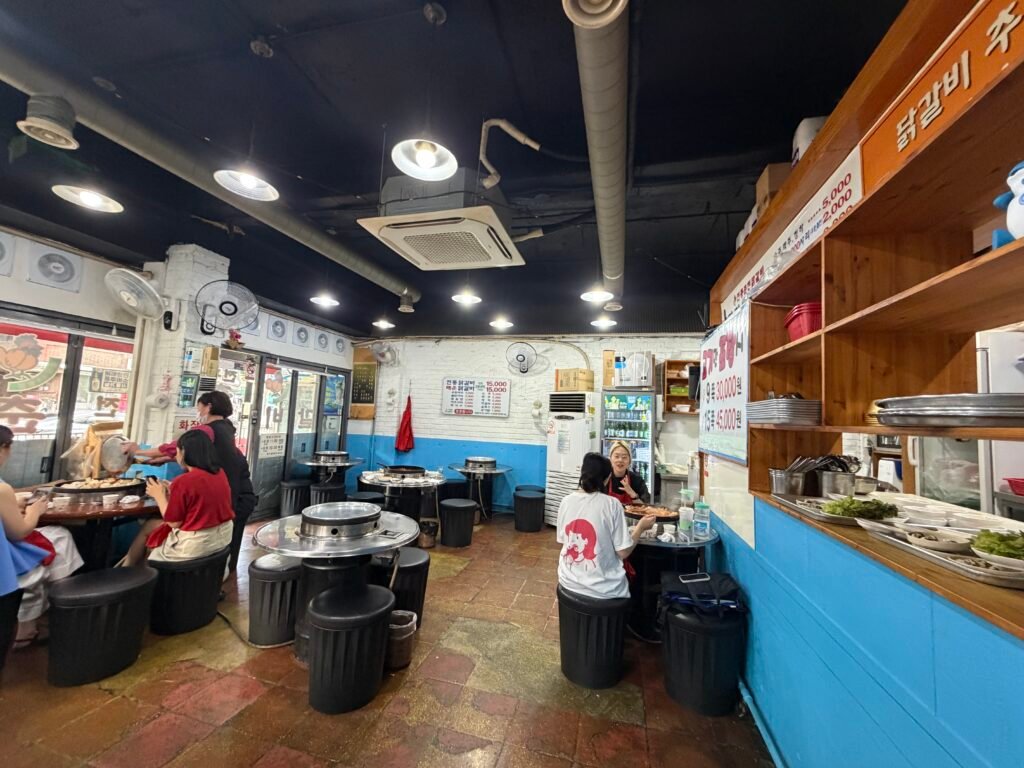
The Staff Cook Everything for You
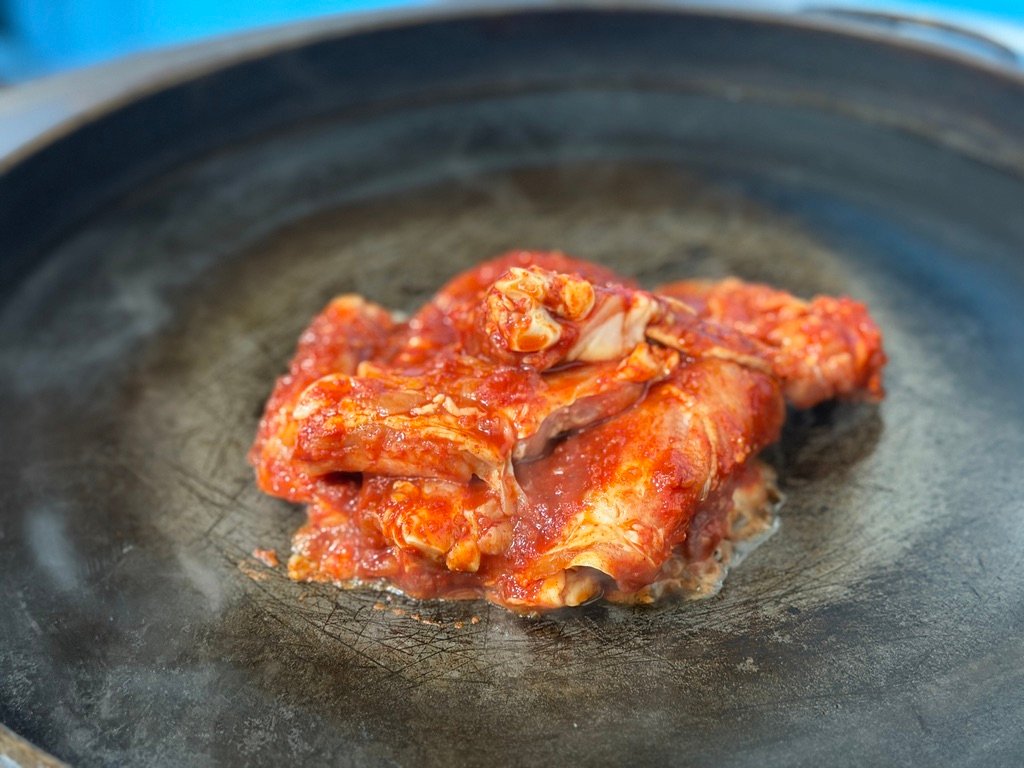
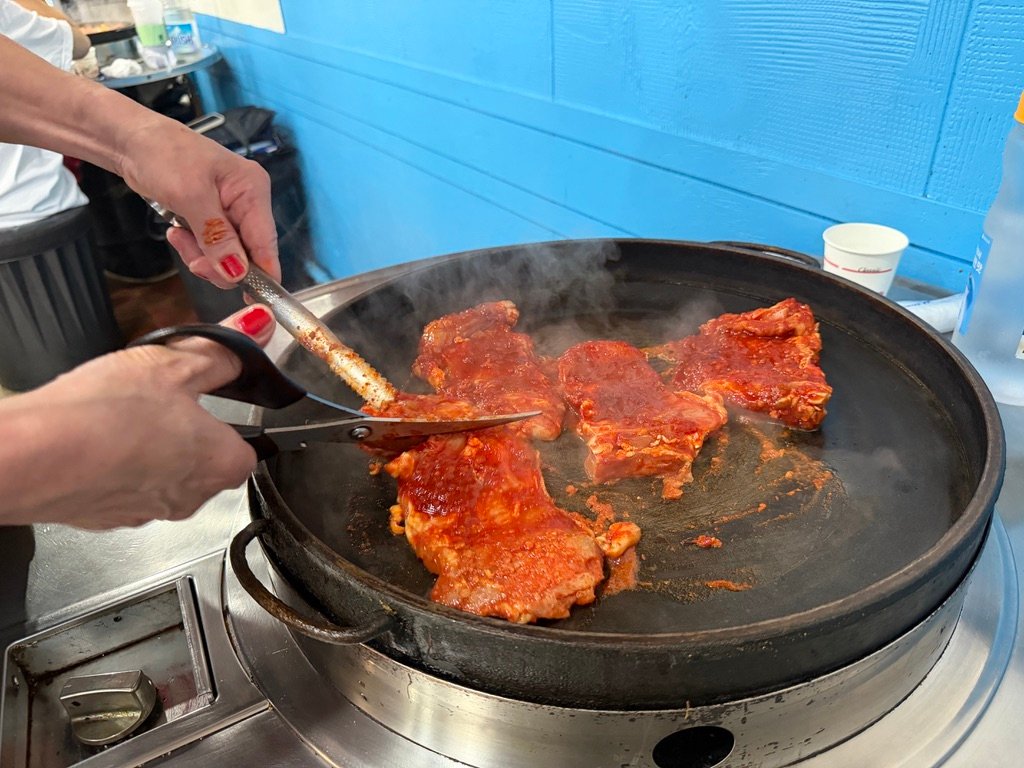
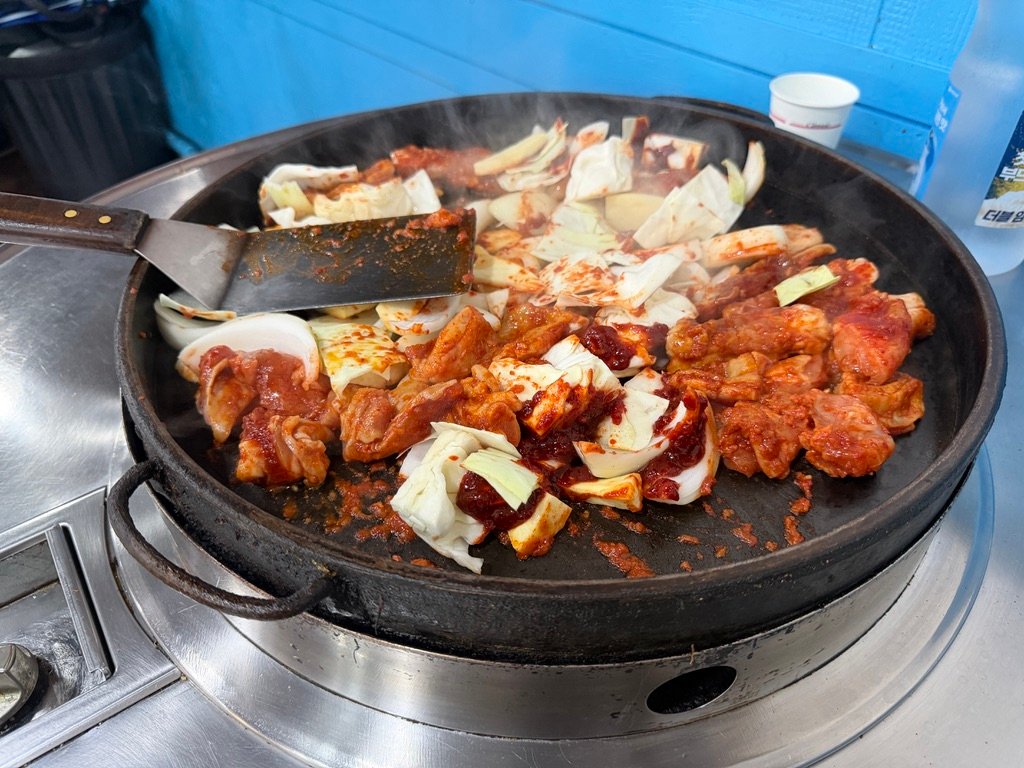
The best part of this place: once you order, staff (referred to as “imonim,” a term for the women working here) handle the entire cooking process. You just sit back and watch — plenty of time to snap photos or take videos.
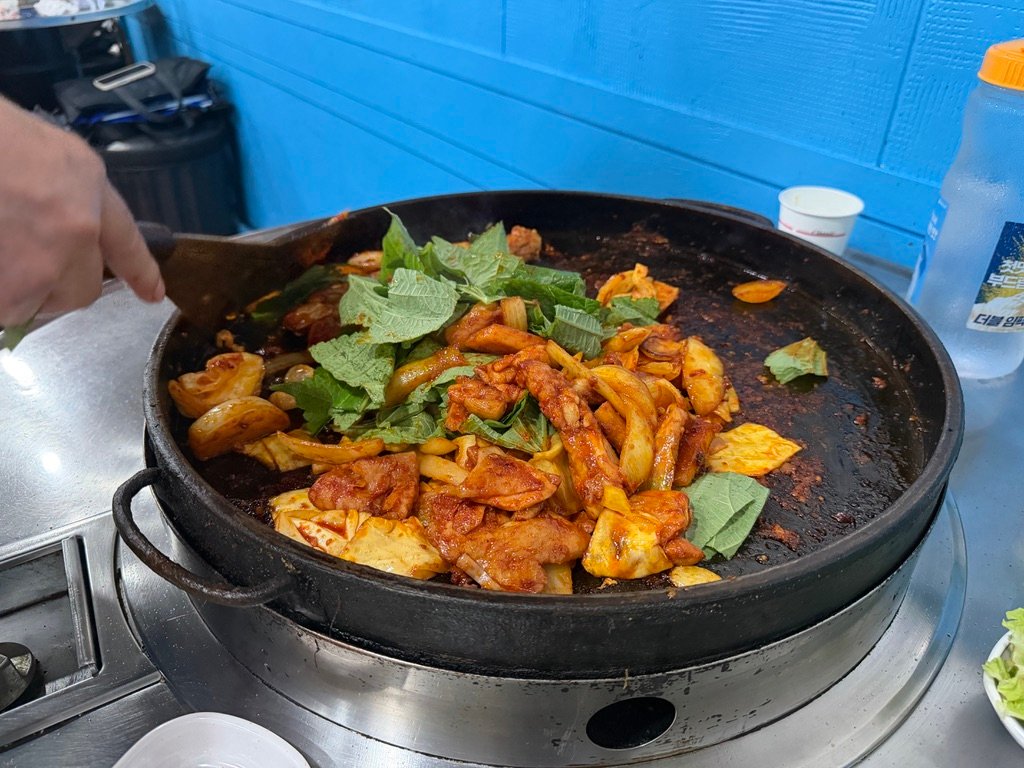
They start by grilling just the chicken, and once it’s partly cooked, they add in cabbage and onion.
The Basic Side Dishes
While you wait for the cooking to progress, the basic banchan arrive — quail eggs, garlic, raw onion, quick-pickled cucumber (oiji), winter water-kimchi broth (dongchimi-guk), perilla leaves, and lettuce.
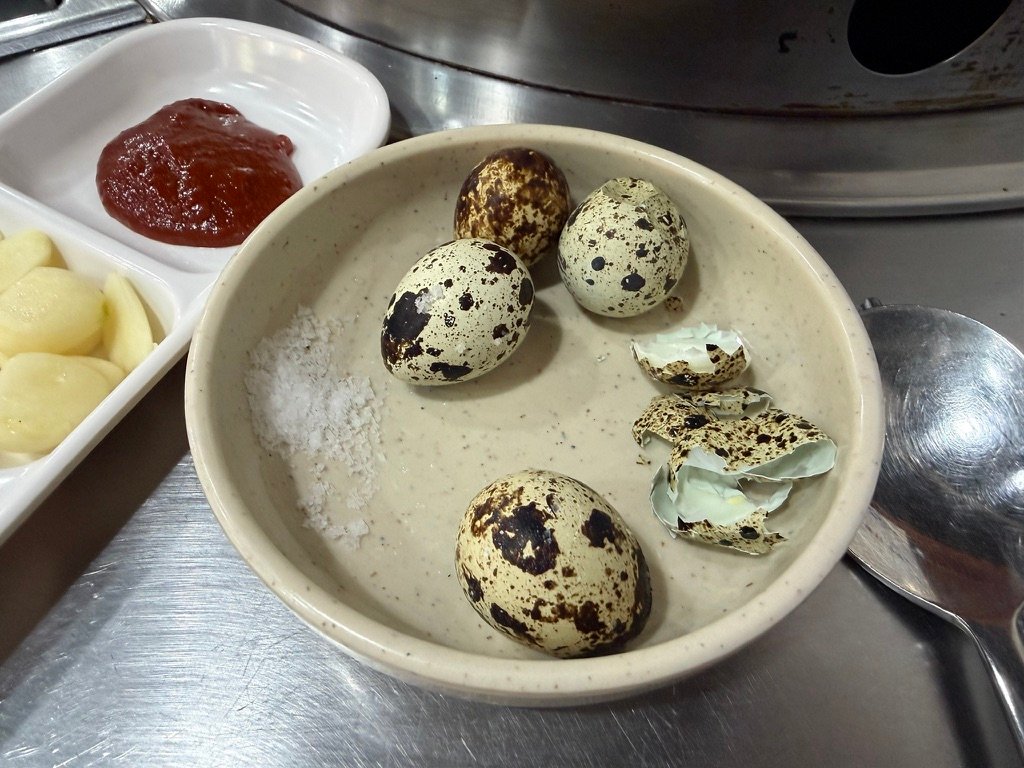
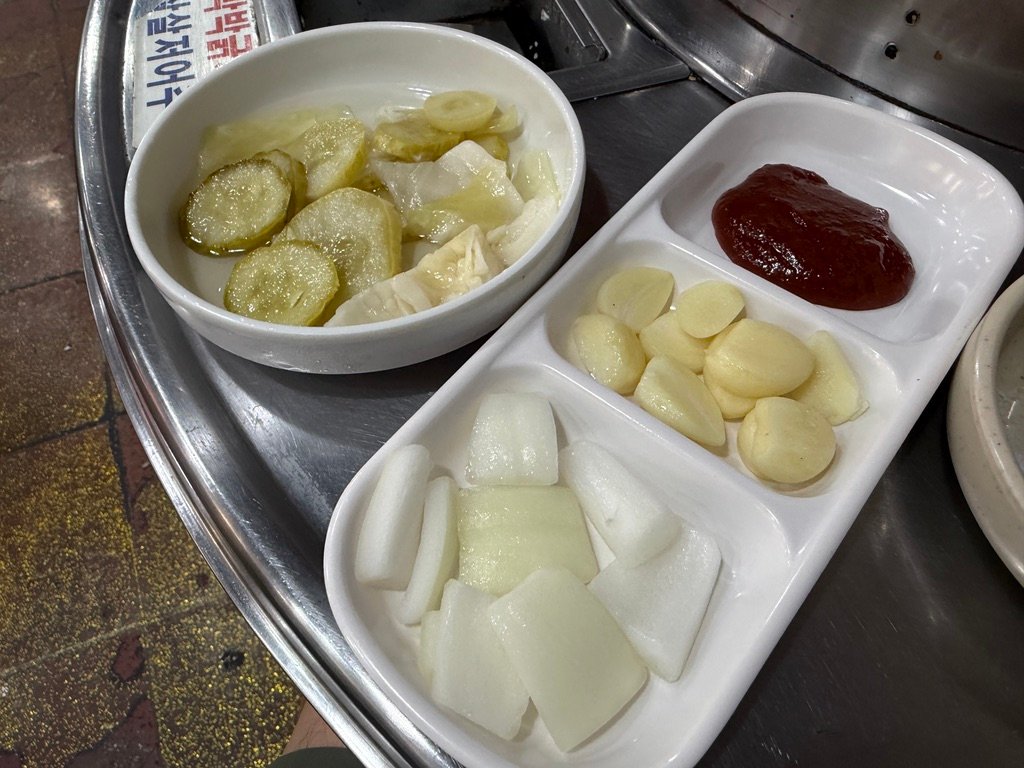
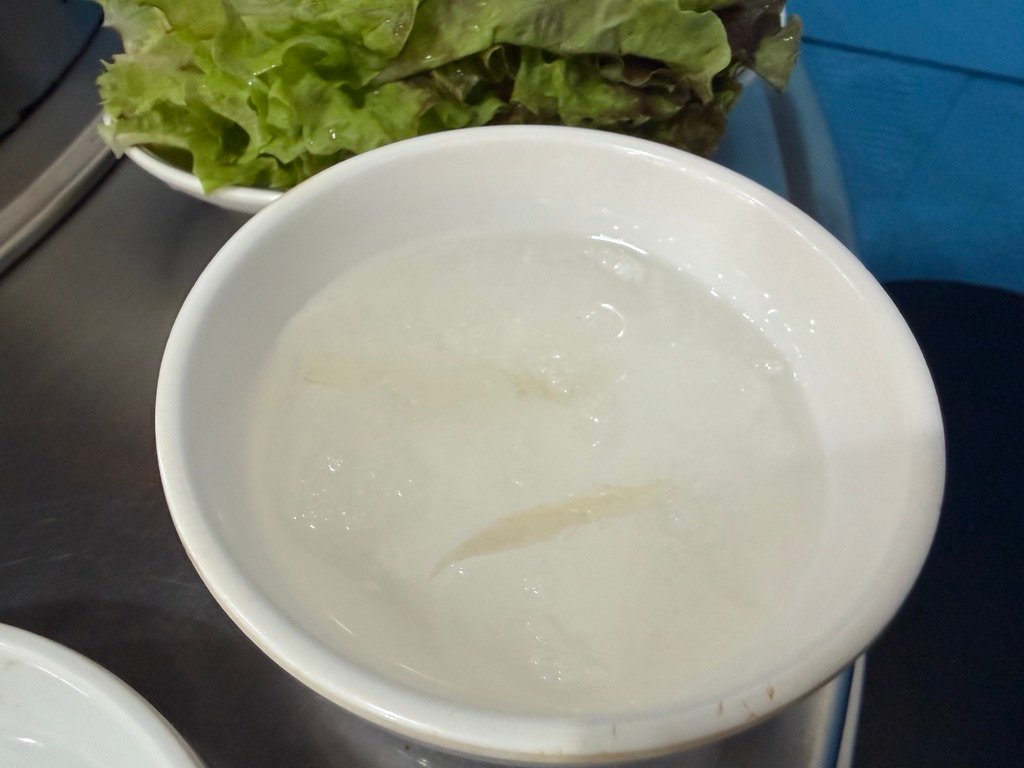
The dongchimi broth in particular is refreshing after a spicy bite and makes for a perfect palate cleanser between rounds.
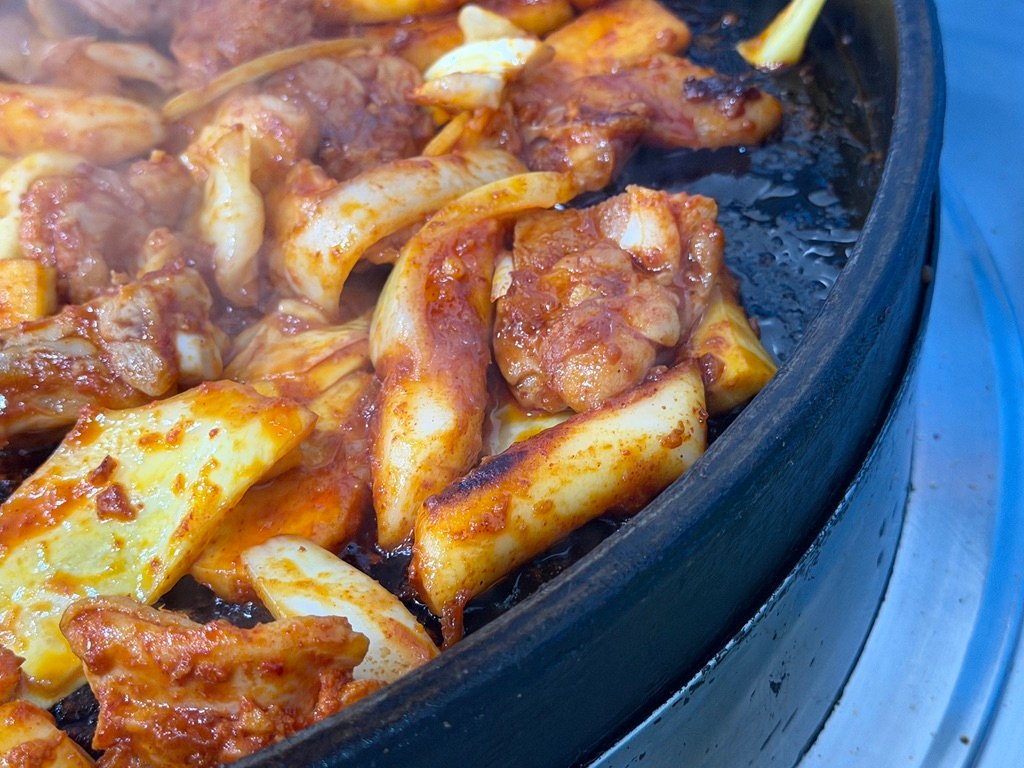
The Sign It’s Ready — The Tteokbokki Rice Cakes
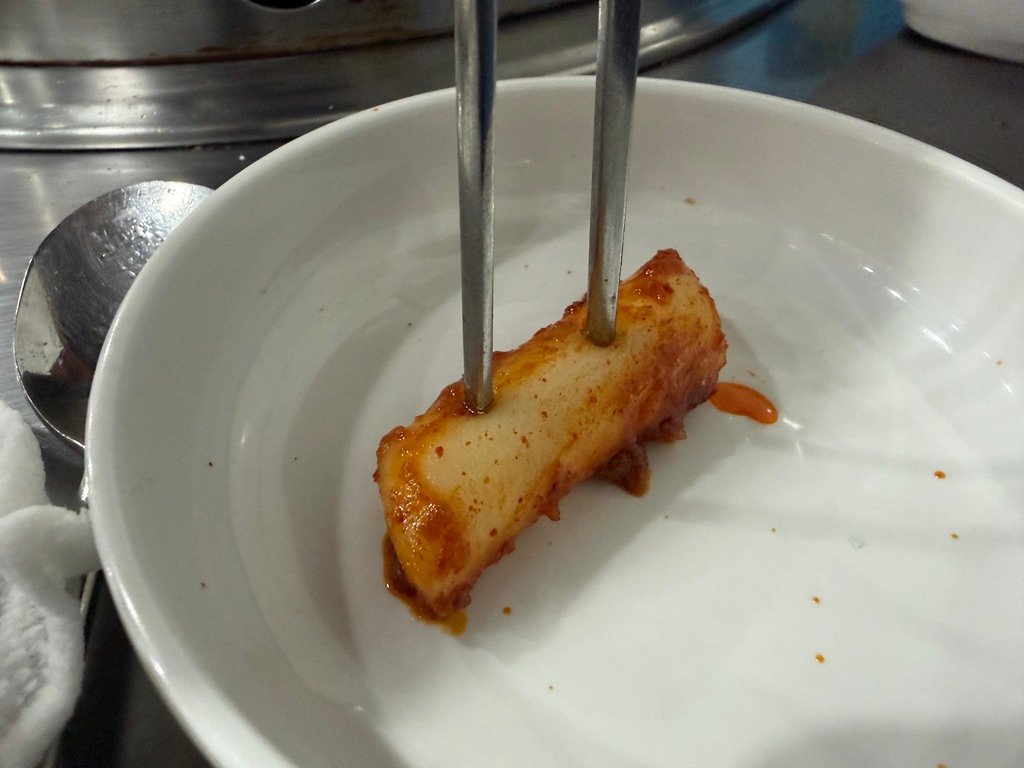
Once things are stir-fried enough, you’re encouraged to try the rice cakes (the long, thin tteokbokki-style ones) first. Testing doneness is simple — poke one with your chopsticks, and if it goes in soft and easily, it’s ready to eat.
For the final touch, perilla leaves get stirred in. You can leave this whole process entirely to the imonim.
My Recommendation — Add Jeolmyeon
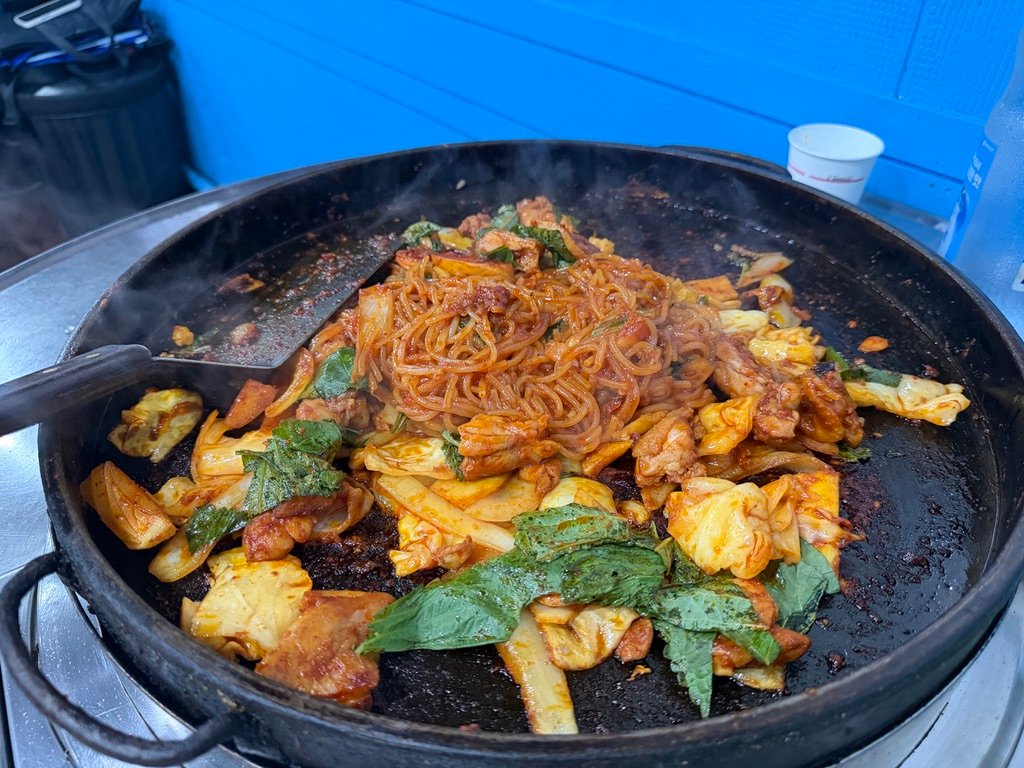
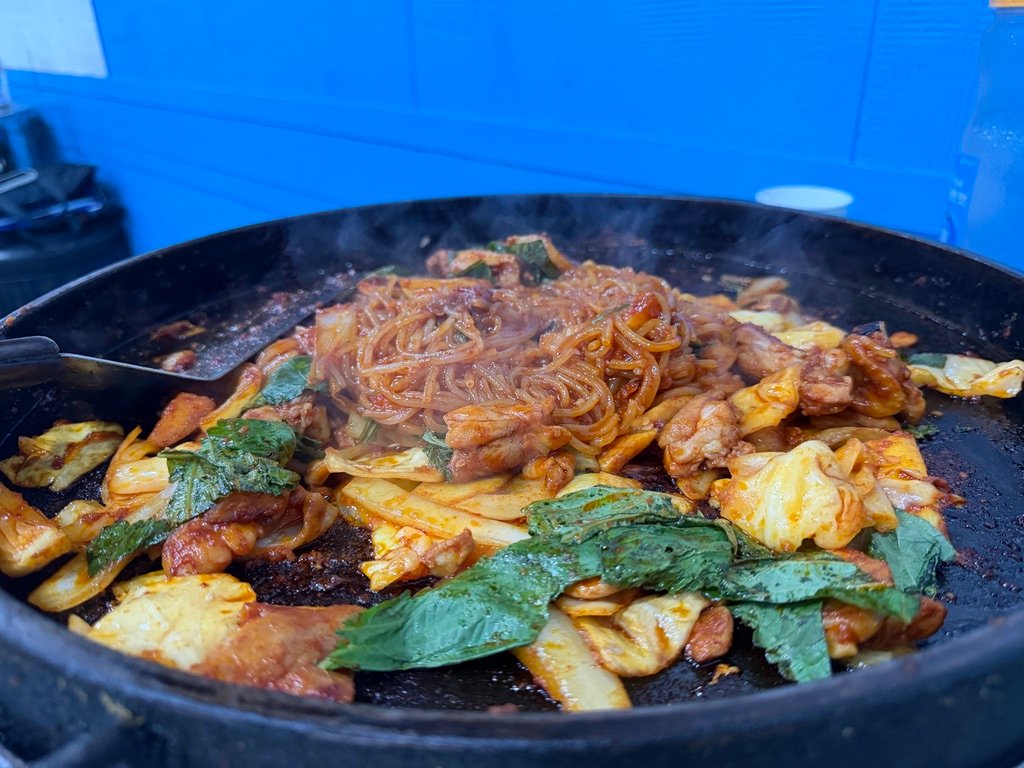
I added jeolmyeon (the chewier noodle option) as an extra. The noodles hold their texture well and don’t get mushy, and they pair really nicely with the dakgalbi sauce. Portions are generous, so depending on how hungry you are, even a modest noodle add-on is plenty satisfying.
A Note on Spice Level
The “spicy” version of dakgalbi here runs hot even by Korean standards. If you’re not into spicy food, definitely go with the mild option (“an maeun-mat”).
Pros & Cons
Pros:
- Staff handle all the cooking, so it’s foolproof even for first-timers
- Simple menu makes ordering easy
- Fun atmosphere, including the distinctive cylindrical table griddles
- Solid basic side dishes, especially the quail eggs and dongchimi broth
Cons:
- The interior is small and can get noisy during busy hours
- Only one core dish (just a spice-level choice), so it may feel limited if you want variety
- The spicy option is genuinely hot — be cautious if you’re sensitive to spice
How to Get There
- Tap or click the map below
- Press “Directions” for a route from your current location
- It’s within walking distance of Dapsimni Station on Line 5