Joseon Gamjatang in Jeonnong-dong: A Bowl That Warms You to the Bone
Tonight’s dinner: Joseon Gamjatang
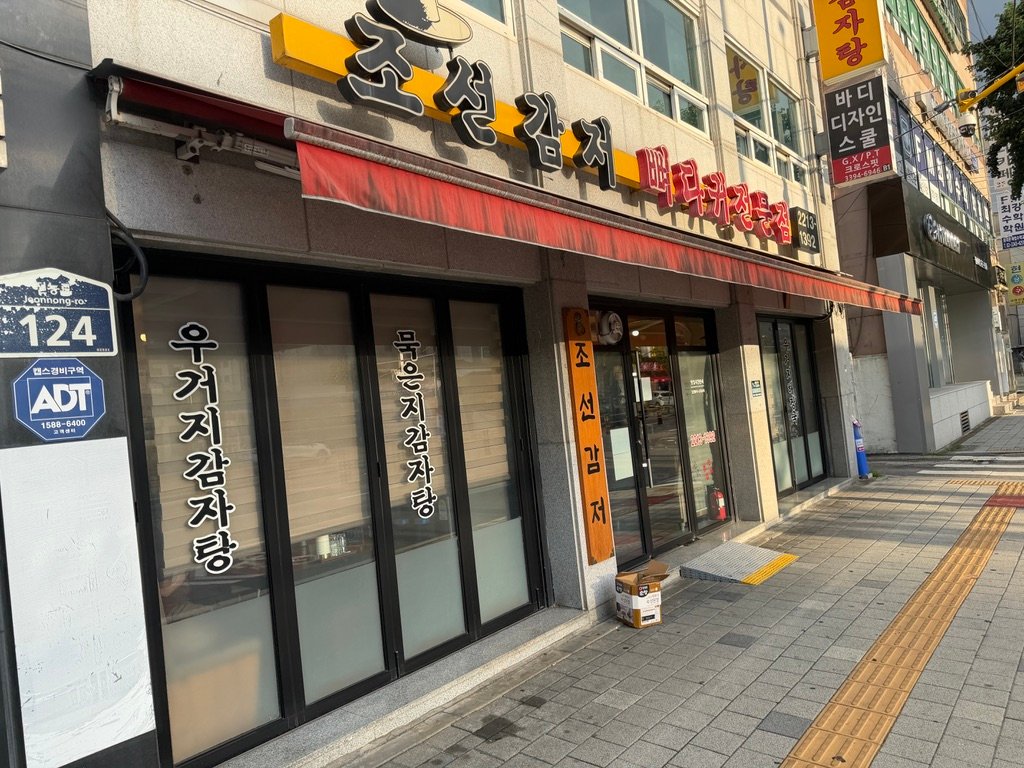
Tonight I headed to Joseon Gamjatang in Jeonnong-dong, Dongdaemun-gu. This isn’t a place built for tourists — it’s a quietly excellent spot where local regulars keep coming back. I’ve never once seen another foreign visitor here. This is about as “locals-only” as it gets.
What Is Gamjatang, Exactly? Where the Name Comes From
Gamjatang is a rich, slow-simmered Korean soup made with pork spine bones, potatoes, dried napa cabbage (ugeoji), and perilla seed powder. It’s beloved as a hangover cure, a full meal, and a drinking-food staple all at once.
There are a few fun theories about where the name comes from. Most people assume it’s named for the potatoes (gamja) in the broth, but that’s only part of the story.
One theory says the bone marrow inside the pig’s spine was historically called “gamja” — meaning the dish was originally named for the pork bones, not the potatoes. Another theory traces it to a Joseon-era term for pork spine, “gamjeo” (甘猪), which eventually morphed into “gamjatang.”
As for its origins, Jeolla-do — a region known for pig farming — is often cited as the birthplace, with the dish reportedly gaining popularity among laborers who gathered in Incheon in the late 1890s to build the Gyeongin railway line, before spreading nationwide. Either way, this is a dish with real working-class roots — pure comfort food built to fuel hard days.
Ordering Is Done the Old-Fashioned Way — With a Person, Not a Kiosk
While kiosks are becoming more common in Korea, this place keeps it old school. You sit down and order directly with staff. Don’t worry if your Korean isn’t confident — just point at the menu and you’ll be fine.
The menu has two main options: ugeoji-gamjatang (with dried napa cabbage) and mugeunji-gamjatang (with aged kimchi), each available in different sizes. The mugeunji version uses traditional kimchi made from high-altitude Gangwon-do cabbage, aged for over 180 days — a properly labor-intensive, old-school approach.
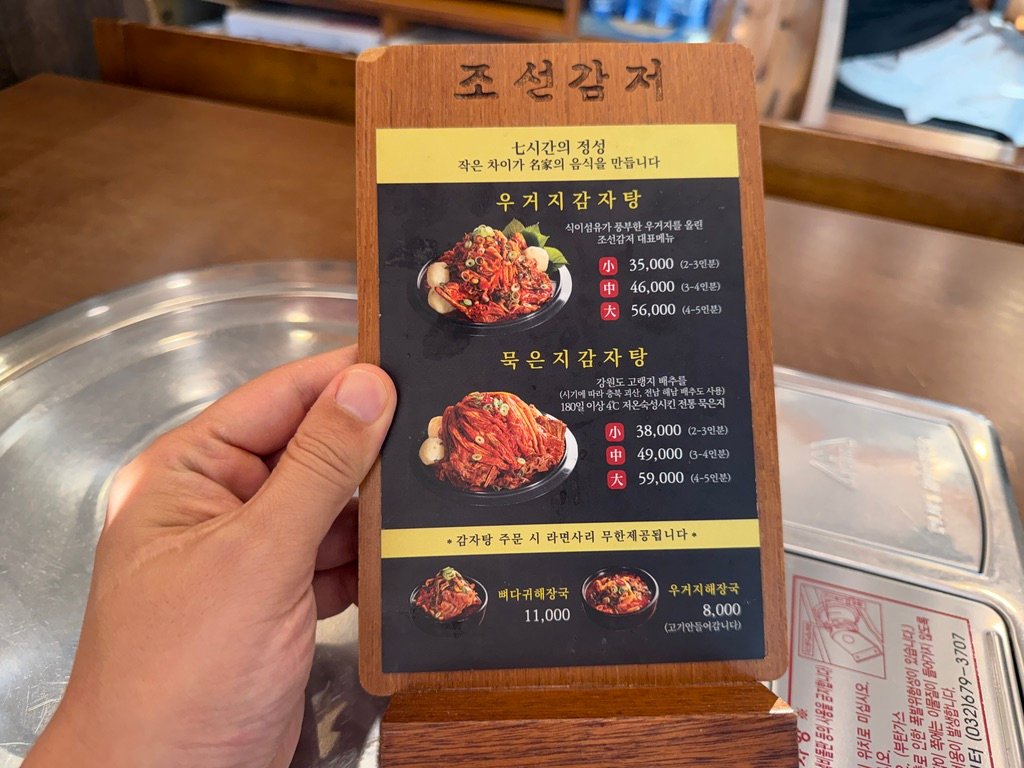
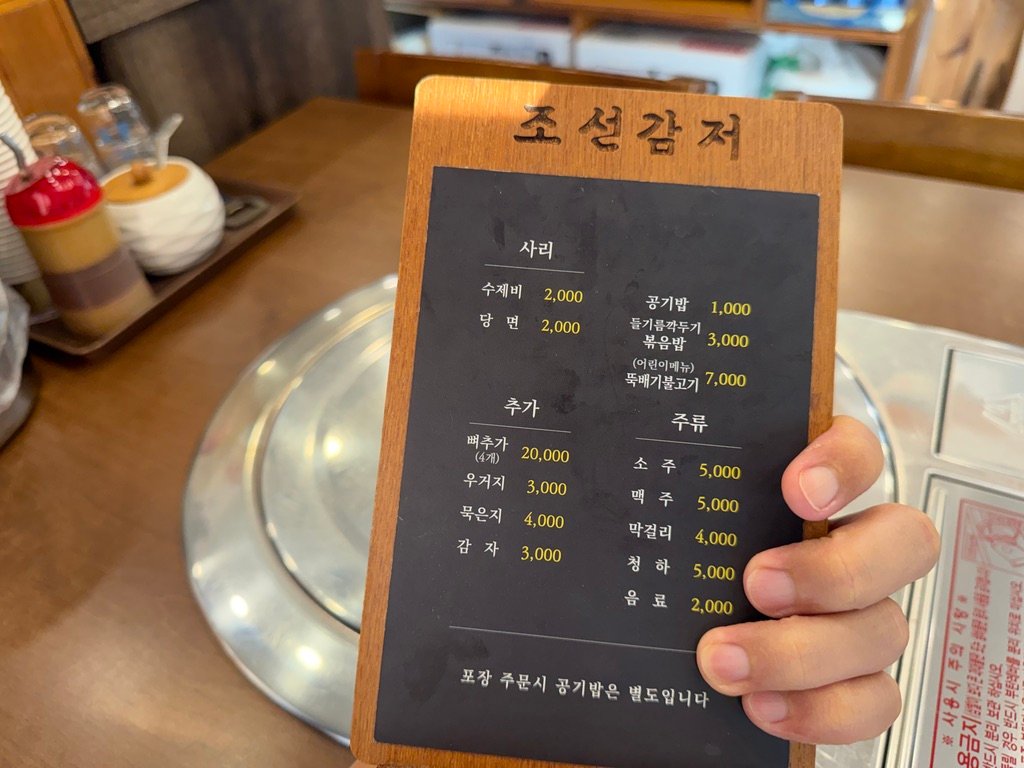
It’s a comfortable place to eat solo, too, which makes it great for solo travelers. There’s also a single-portion “ppyeodagwi haejangguk” (bone hangover soup) and a lighter, meat-free “ugeoji haejangguk,” so it works well for smaller appetites too.
A Pot Bubbling Away Arrives at the Table
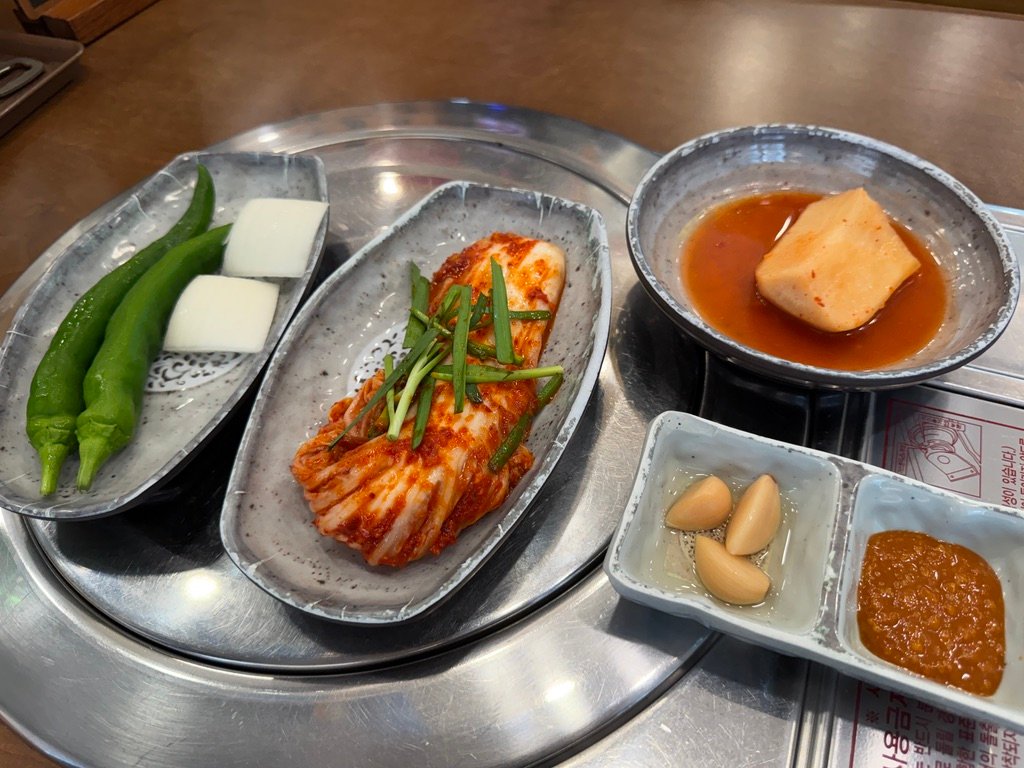
Once you order, a simple but appetite-sparking spread of banchan arrives first — green chili peppers, cheese, kimchi, and pickled radish water kimchi (oi-ji). There’s also tofu topped with a gochujang-based sauce, which is light and refreshing between spoonfuls of the spicy soup.
Then comes the star of the show — a stone pot of bubbling gamjatang, with hefty pork spine bones sitting right in the center.
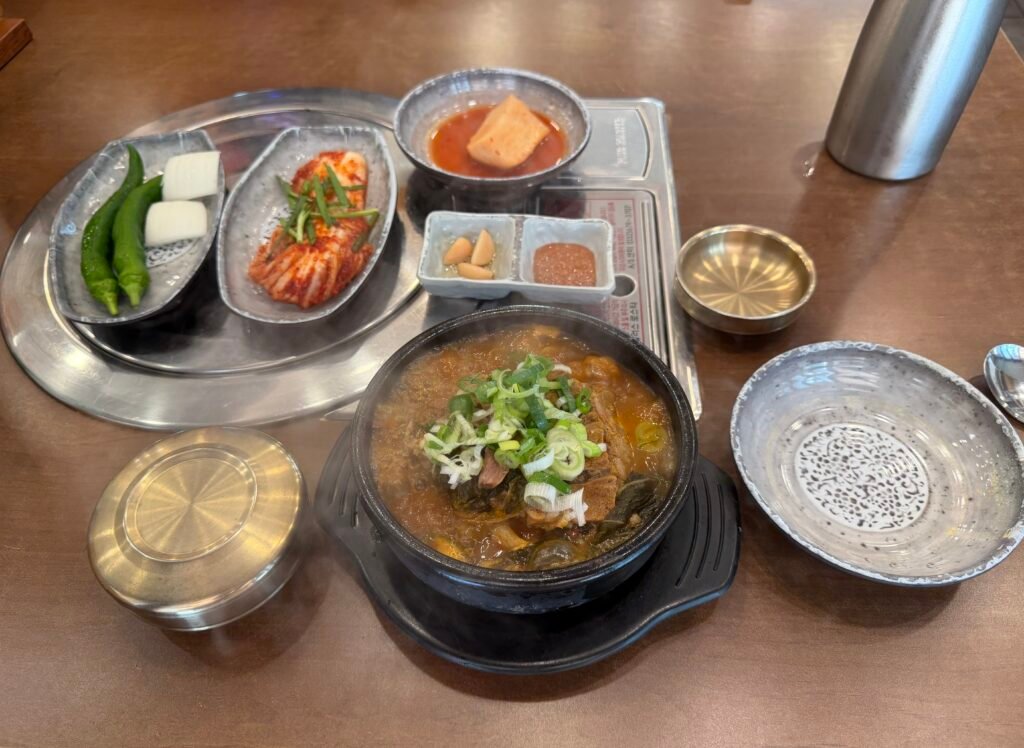
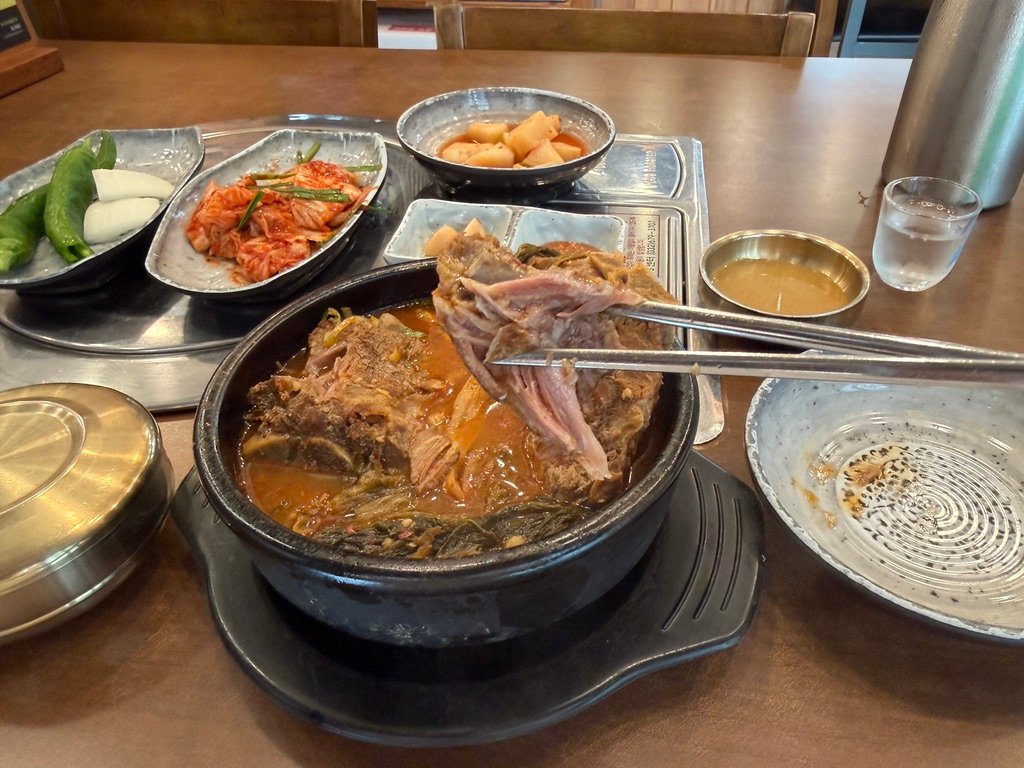
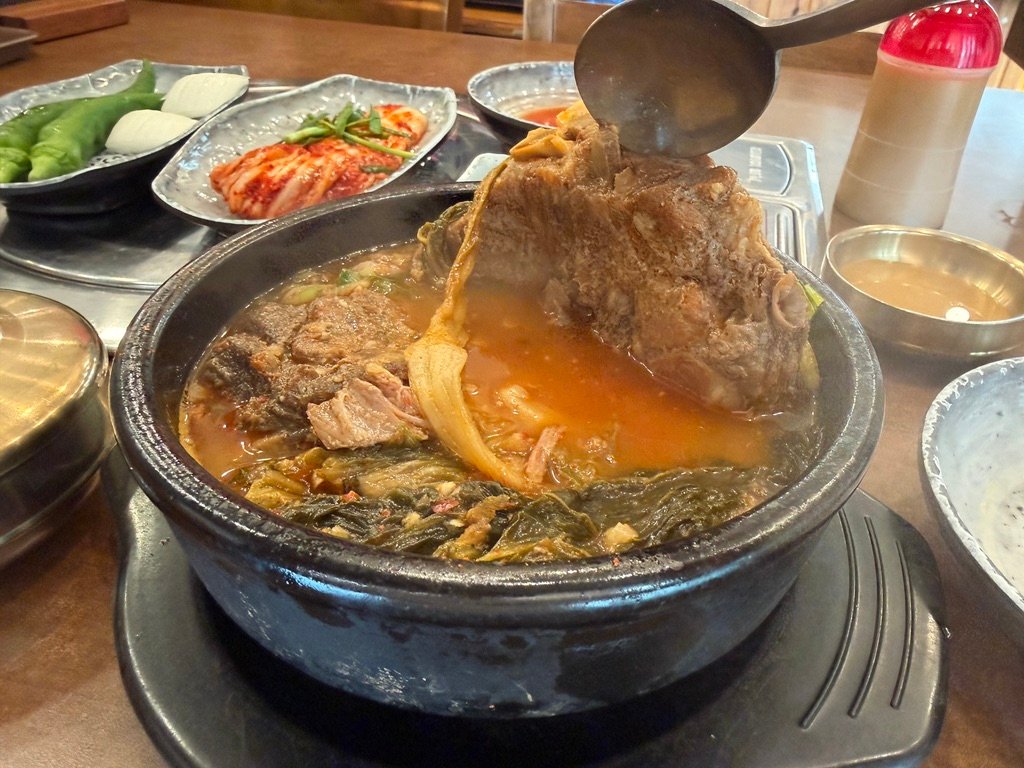
The meat falls right off the bone, tender and soft, and the dried napa cabbage soaks up the broth beautifully. Steam rises with every spoonful.
A generous handful of chopped scallions finishes it off, adding a fresh aromatic kick — by this point, it’s hard to resist digging in.
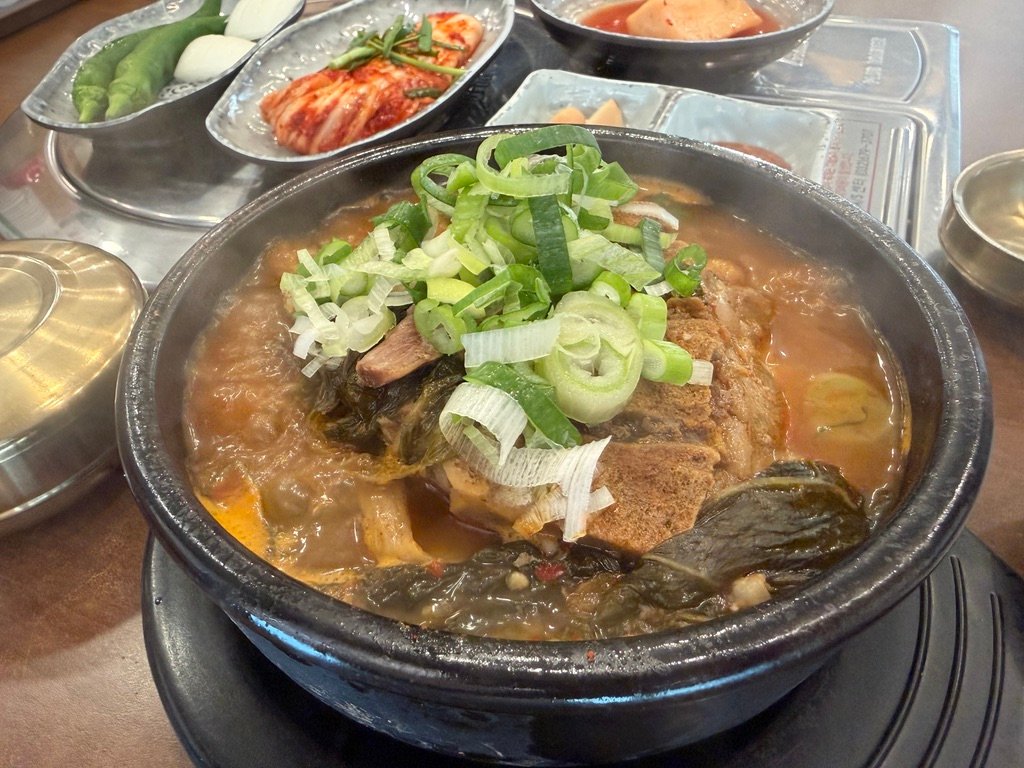
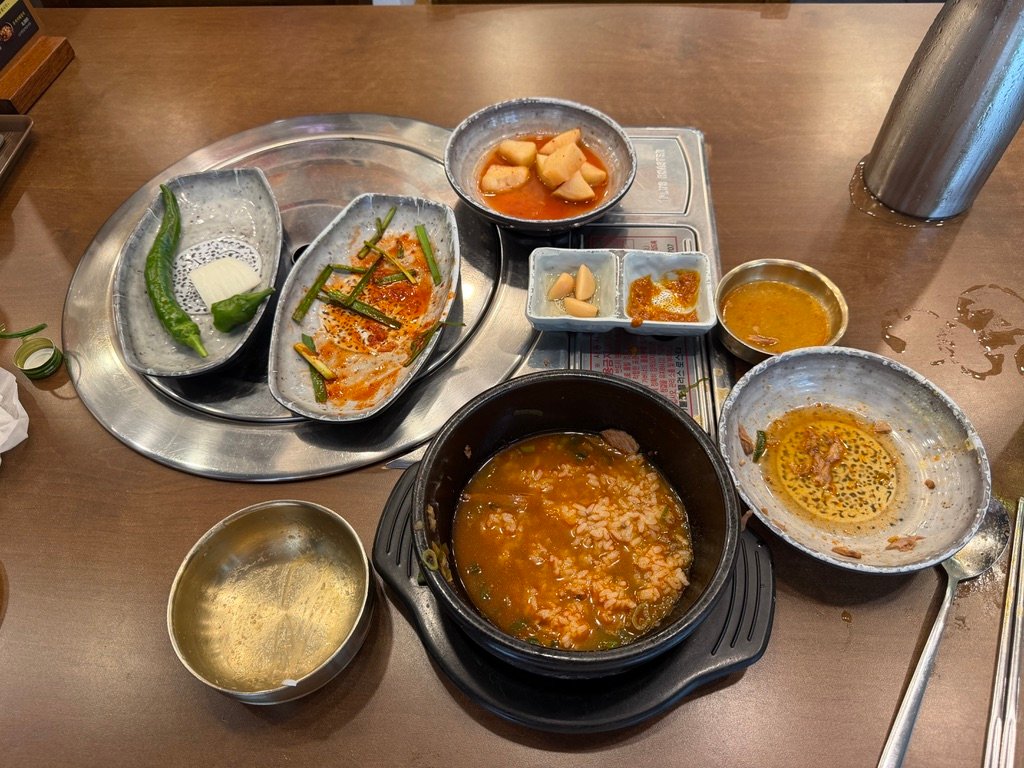
As you eat, staff will help pick apart the meat, and near the end, they’ll add rice directly into the leftover broth in the pot. That rice — packed with all the flavor that’s leached out of the bones — might honestly be the best part of the whole meal.
Self-Serve Extra Sides, and Unlimited Noodles
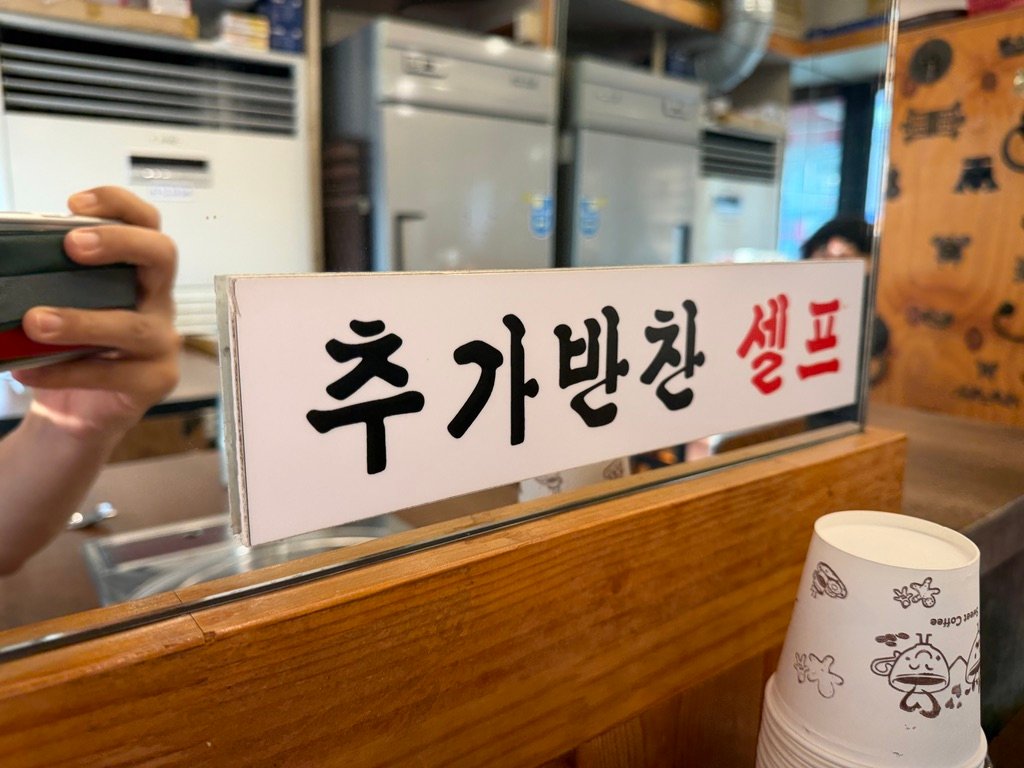
There’s a sign inside that reads: extra side dishes are self-serve. If you run low on kimchi or banchan, feel free to just help yourself.
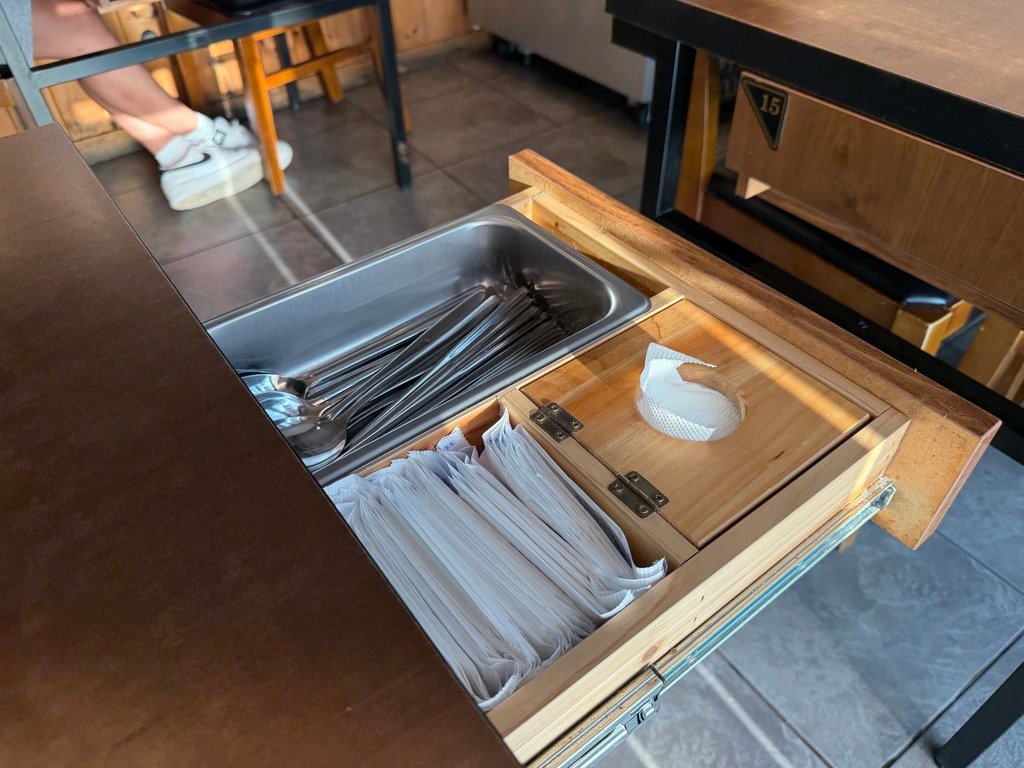
There’s also a drawer built into the table with spoons, chopsticks, and napkins — take what you need. It’s a small touch, but it shows the attention to detail.
And here’s the best part — order gamjatang and you get unlimited ramyeon noodles (라면사리) thrown in for free. Once the broth starts running low, just add noodles and keep the meal going.
Pros & Cons
Pros:
- Generous portions of pork bones — great value for the price
- Self-serve extra sides plus unlimited noodles makes for a very satisfying meal
- Comfortable for solo diners
- A genuinely local spot, untouched by tourism
Cons:
Bone-in meat takes a bit more effort to eat
Ordering is verbal only, with a Korean-only menu (no foreign language options)
The broth isn’t mild — not ideal if you’re sensitive to spice
Restaurant Info
Name: Joseon Gamjatang (조선감자탕)
Address: 124 Jeonnong-ro, Dongdaemun-gu, Seoul
Specialty: Ugeoji-gamjatang / mugeunji-gamjatang, plus bone-in haejangguk
Ordering: In person with staff (no kiosk)
Extras: Self-serve side dishes, unlimited ramyeon noodles with gamjatang orders