Nonsangol Kalguksu in Jeonnong-dong, Seoul: A Deep Dive Into Jang-Kalguksu
A Hidden Neighborhood Spot Worth Knowing
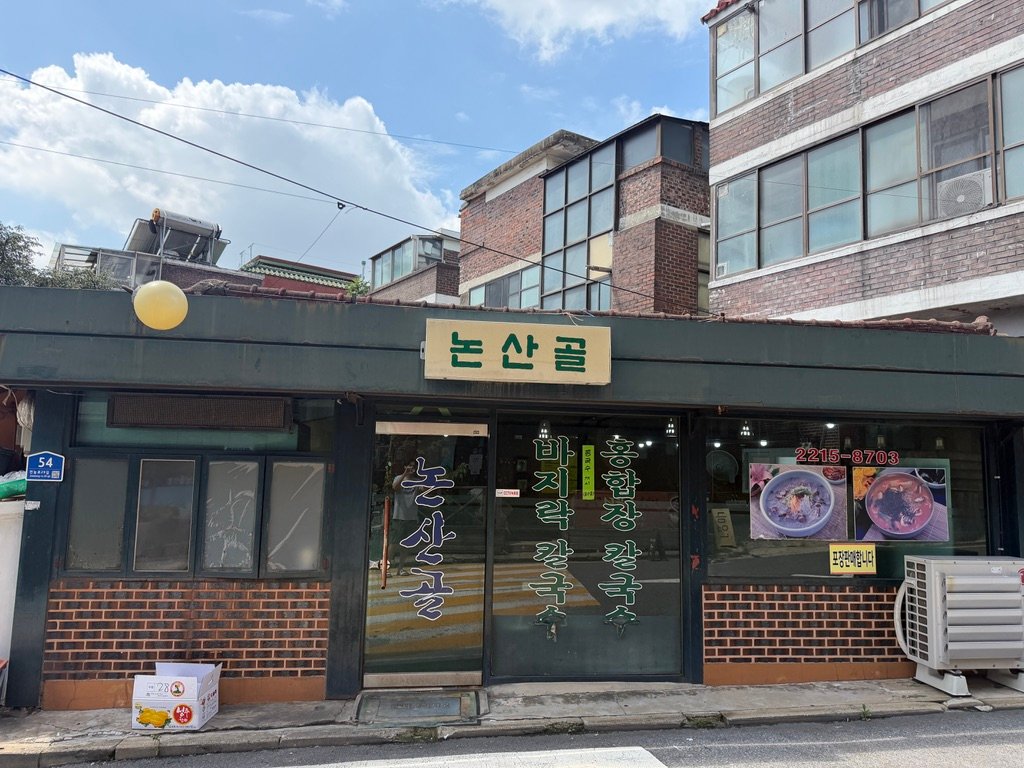
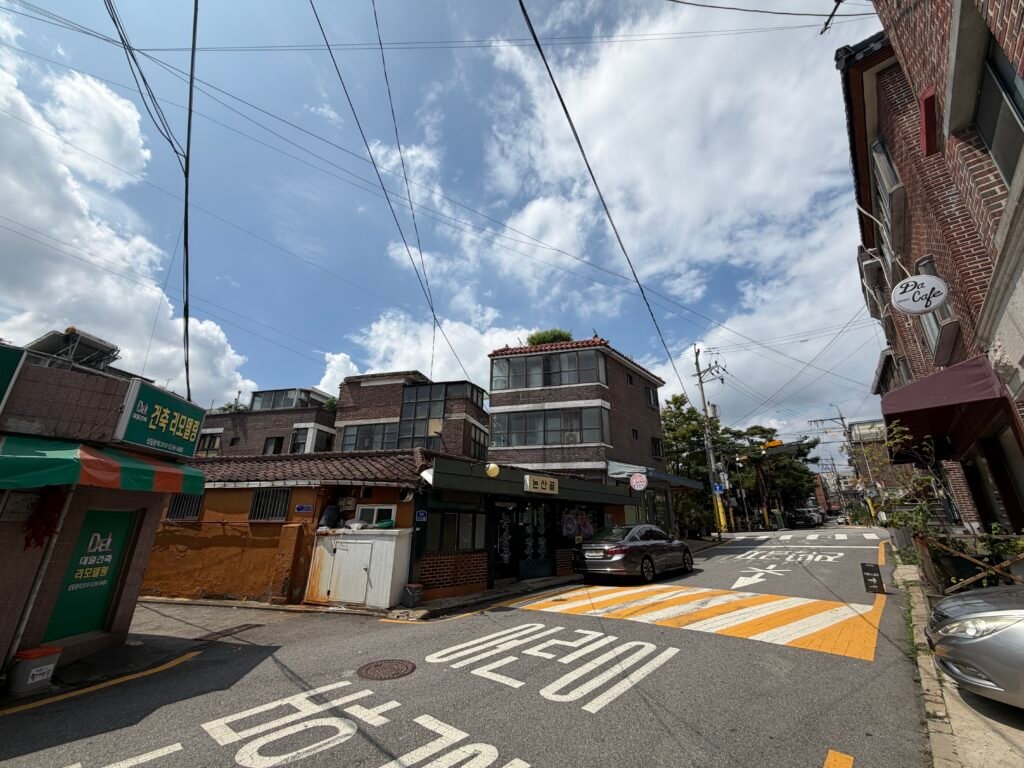
Today I’m covering a kalguksu spot called Nonsangol (논산골), tucked into a quiet residential alley in Jeonnong-dong, Dongdaemun-gu — a bit off the beaten tourist path, but with exactly the kind of worn-in, well-loved feel you’d expect from a place locals have been coming back to for years.
The sign out front only lists two things: clam kalguksu (바지락칼국수) and mussel jang-kalguksu (홍합장칼국수), with a seasonal bean-noodle soup (콩국수) added in summer. That’s it — no sprawling menu, just two or three dishes they’ve clearly perfected over time.
What Exactly Is Jang-Kalguksu? A Gangwon-do Specialty
Jang-kalguksu (장칼국수) isn’t something most visitors have heard of. It’s a spicy version of Korean hand-cut noodle soup, seasoned with gochujang and doenjang, and it originated in Gangwon-do province.
Back when salt was hard to come by in Gangwon-do’s mountain villages, people used fermented soybean paste and chili paste to season their noodles instead — and that’s essentially where jang-kalguksu comes from. The flavor varies a bit by region; along Gangwon’s east coast, it usually leans more gochujang-forward with a touch of doenjang, built on a rich seafood broth.
Nonsangol’s version fits that mold exactly — mussel-based broth meeting a spicy gochujang base, bringing a proper taste of Gangwon-do right into a Seoul neighborhood.
The Meal: Clams Are Great, But I Always Order Jang-Kalguksu
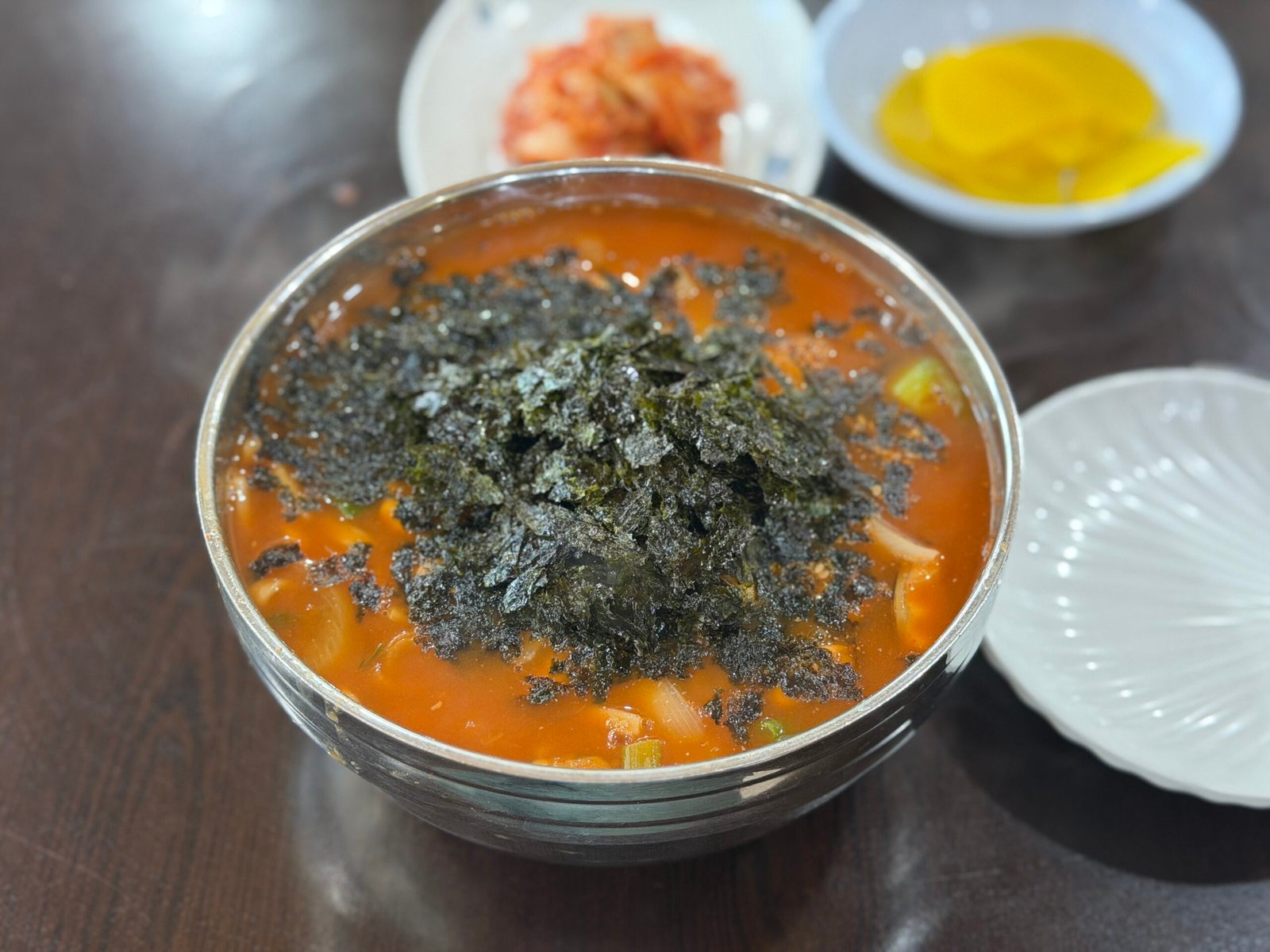
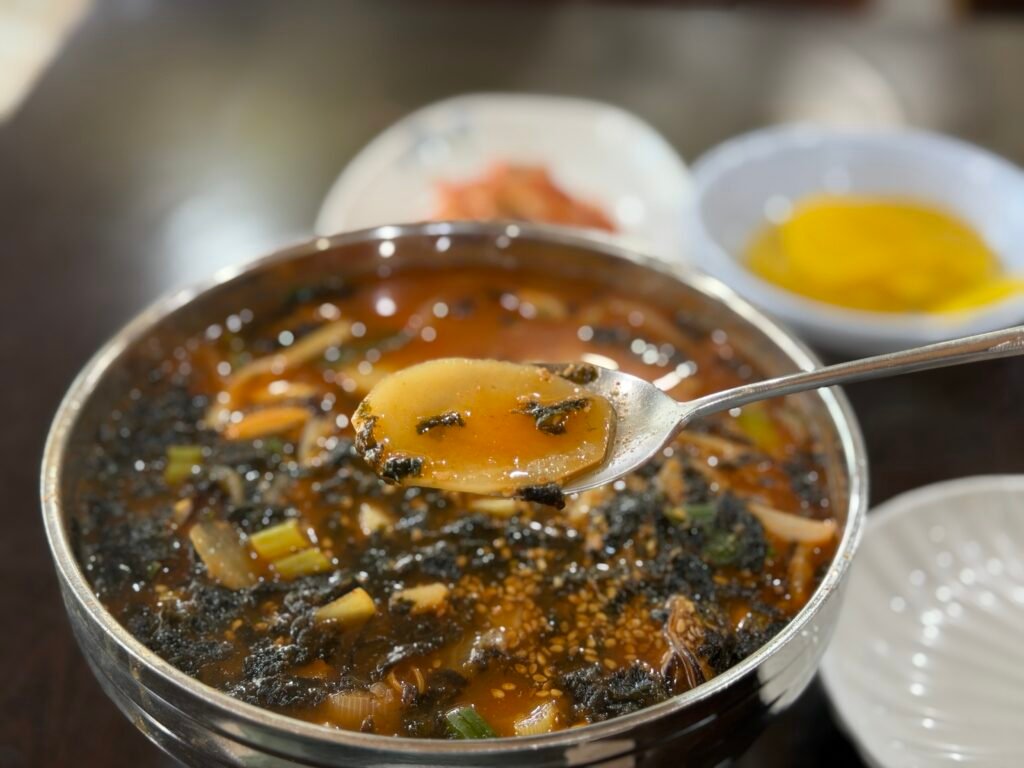
Full disclosure — their clam kalguksu is genuinely good too, but every time I come here, I order the jang-kalguksu without fail. The bowl arrives bright red, generously topped with roasted seaweed flakes and sesame seeds. It looks as good as it tastes.
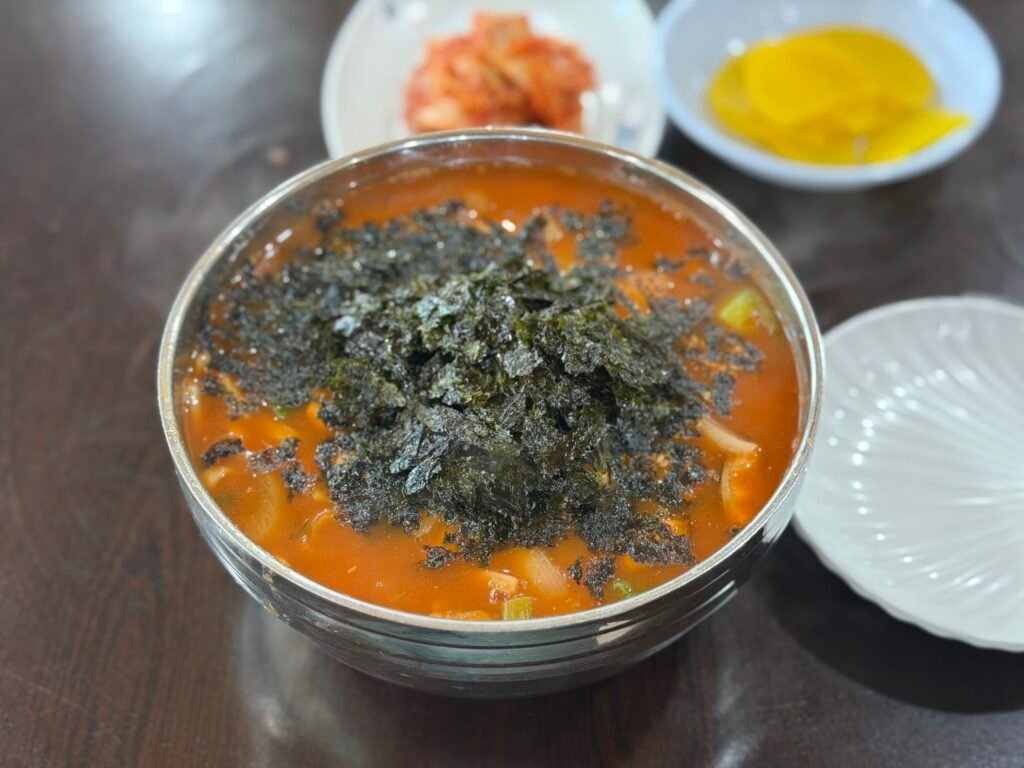
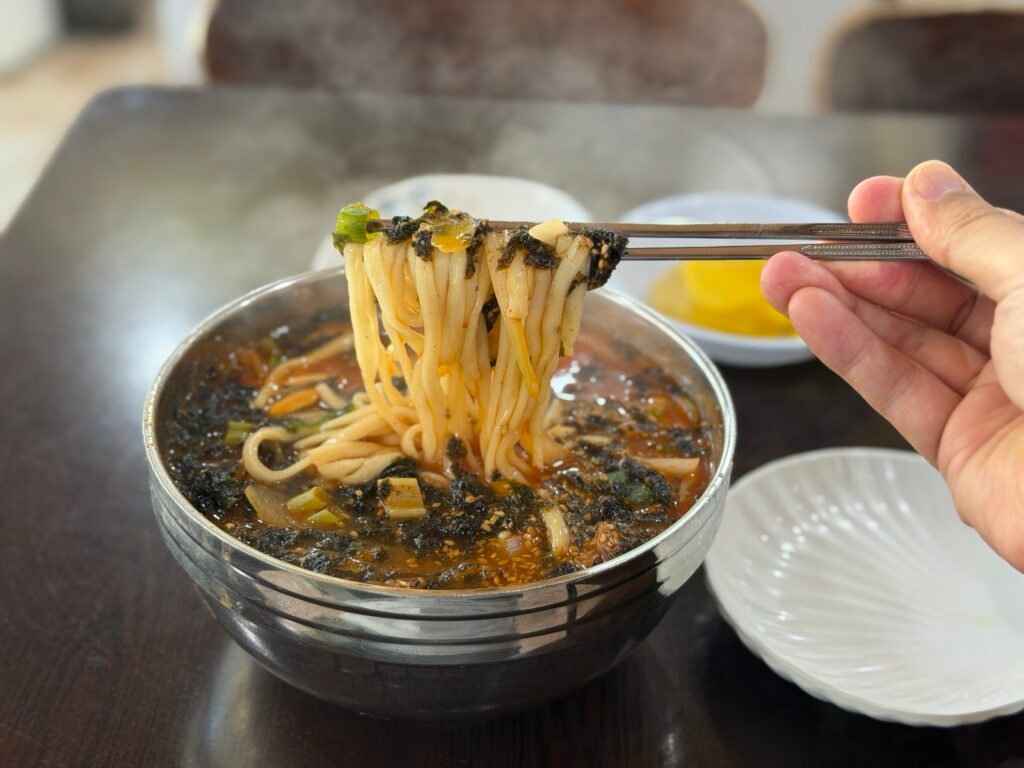
The first sip of broth hits with gochujang heat, followed by a deep, savory wave from the mussel and seafood stock underneath. It’s not just spicy — there’s real depth to it, which is what makes Nonsangol’s version stand out. The noodles are chewy, handmade, and cling to the broth perfectly.
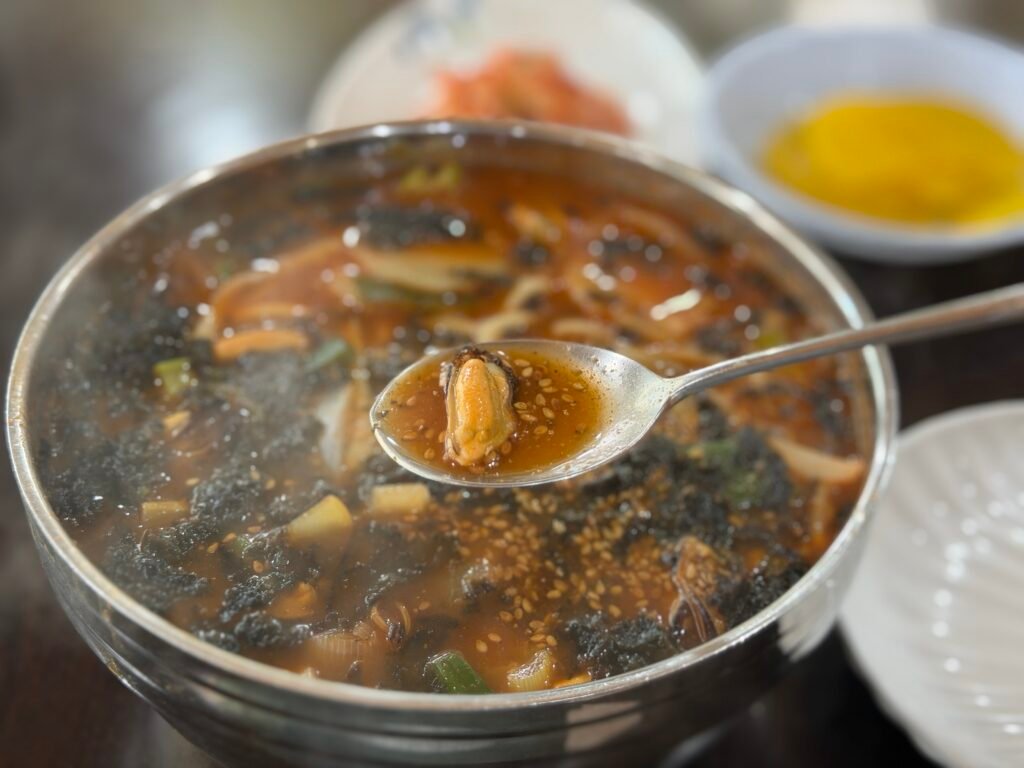
The broth is loaded with plump mussels too, which add a nice textural contrast — great news if you’re a shellfish person.
Sides and What to Order
They also serve steamed dumplings (찐만두) as a side, but fair warning — they’re quite filling. Four pieces alone can leave you pretty full. Personally, I’d skip the dumplings and just go with the noodles solo, or if you’re extra hungry, order the “gopbaegi” (곱빼기) large portion instead. That alone makes for a fully satisfying meal.
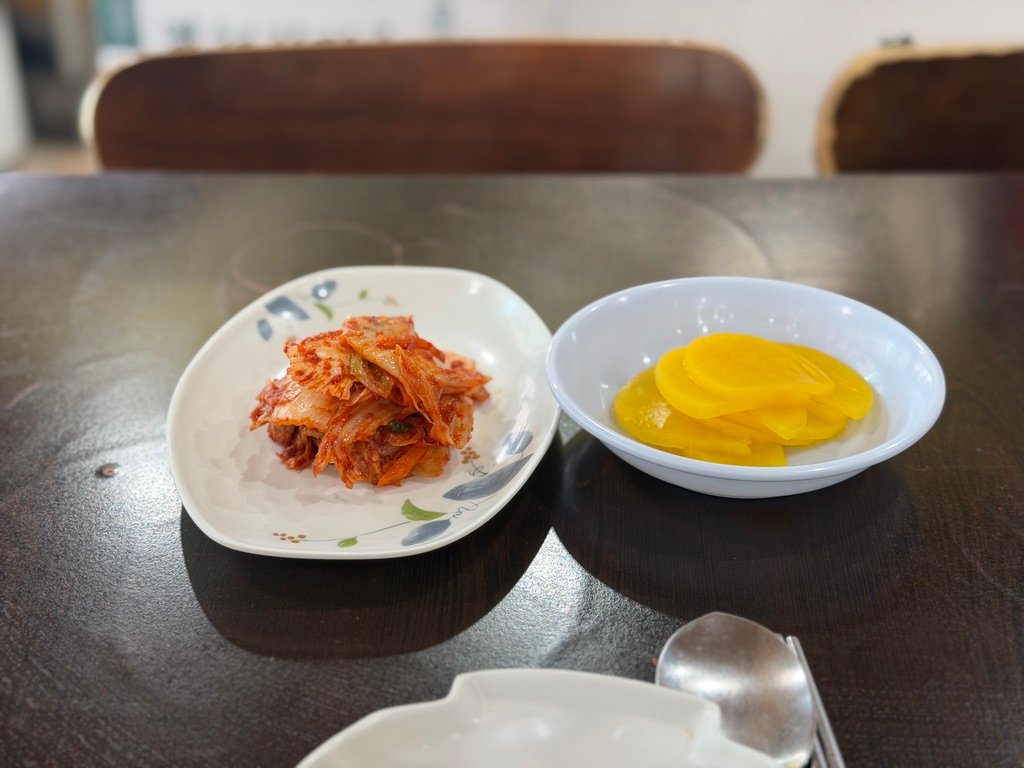
The kimchi and pickled radish sides are light and refreshing, and they pair really well against the spicy broth.。
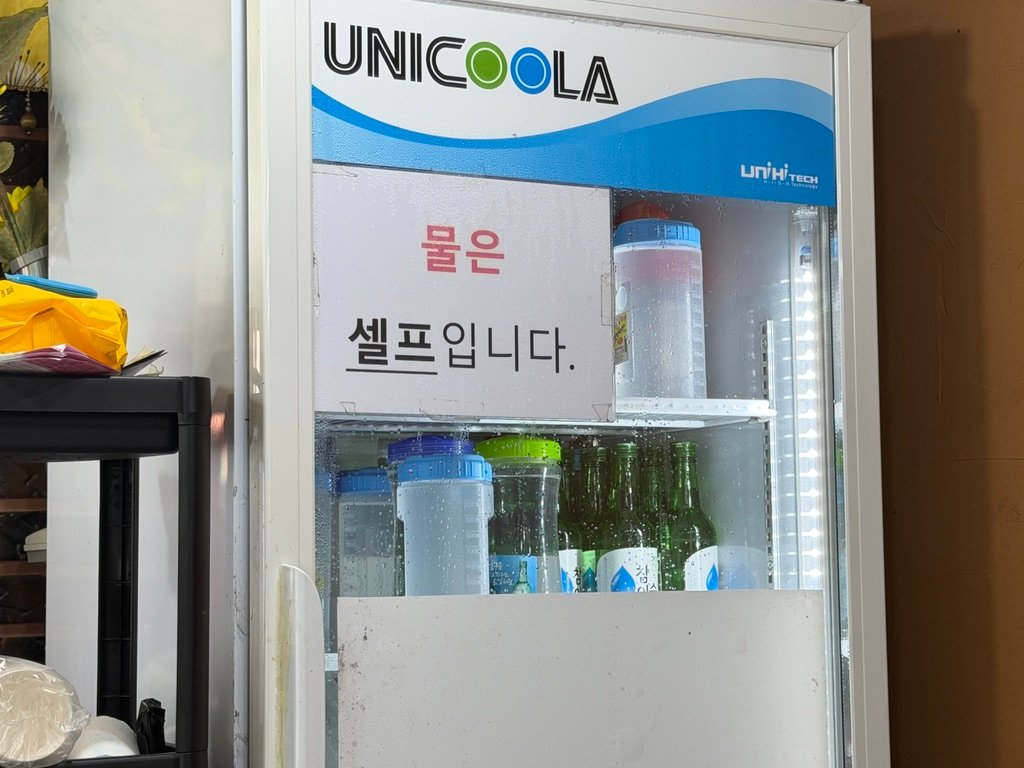
There’s also a self-serve water station, which adds to the casual, no-frills vibe I really like about this place.
Final Thoughts
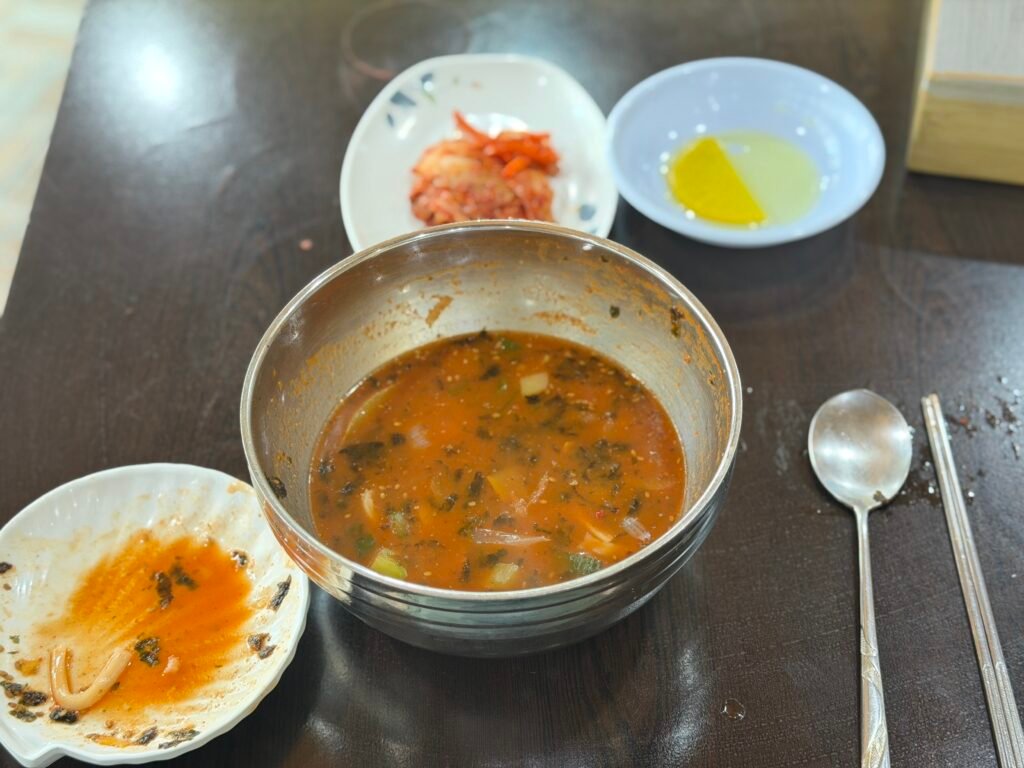
By the time I finished, there was barely any broth left and nothing but empty shells in the bowl. Another satisfying meal — good for both the stomach and the soul. Thanks for the meal, as always.
Pros & Cons
Pros:
- Authentic Gangwon-style jang-kalguksu, hard to find in Seoul
- Rich, deep broth built on mussel and seafood stock
- Simple menu — no decision fatigue
- Unpretentious, neighborhood feel
Cons:
- A bit out of the way from major tourist areas
- Limited menu means fewer options if you don’t like spicy food
- Small seating area — expect a short wait during peak hours